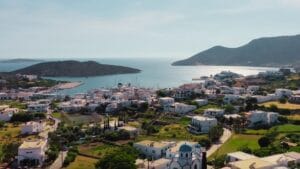
Kythira Island is a beautiful island located near the southern part Peloponnese. Kitira stands out for its medieval architecture, secluded beaches and beautiful natural surroundings. Tourist places in Kythira are Avlemonas, Agia Pelagia, Hora and Kapsali.
However, if you like some more hidden places to explore, driving around the island will take you to cliff top villages, abandoned places, hidden beaches and monasteries and you will discover many surprises!
One of the most famous places to visit is the Venetian Castle above Hora, the capital of the island. This castle boasts panoramic views of the Aegean Sea and the southern shores of the Peloponnese, so it's a great spot for sight-seeing. sunset.

In addition to the medieval castle, do not miss to visit the monasteries of Agia Moni, Agia Elesa and Myrtidiotissa, as well as the church in the cave of Saint Sophia. It will steal your breath away with its beauty! Another must-have experience while on the island is a walk around the ghost village of Paleochora, followed by a swim at Lagada Beach. Honestly, Kithira is an island that never ceases to amaze visitors!
💸 Planning to rent a car? Take a look how to save money on car rental for your next trip for tips on how to keep your travel budget under control!
How to get to Kythira?
Kythira is located further away from the other Ionian islands, so it is quite secluded. However, its incredible beauty makes up for the rather long journey you have to make to reach this destination.
Accommodation, beaches and sights
👉 Don't let the lack surprise you internet while exploring the world! Read the whole text and find out which ones are the best internet access applications for carefree and safe travels.
History of Kythira
The history of Kythira dates back to ancient times and is rich and varied. The island has been occupied by several peoples and many evidences show the influence of foreign cultures to this day.
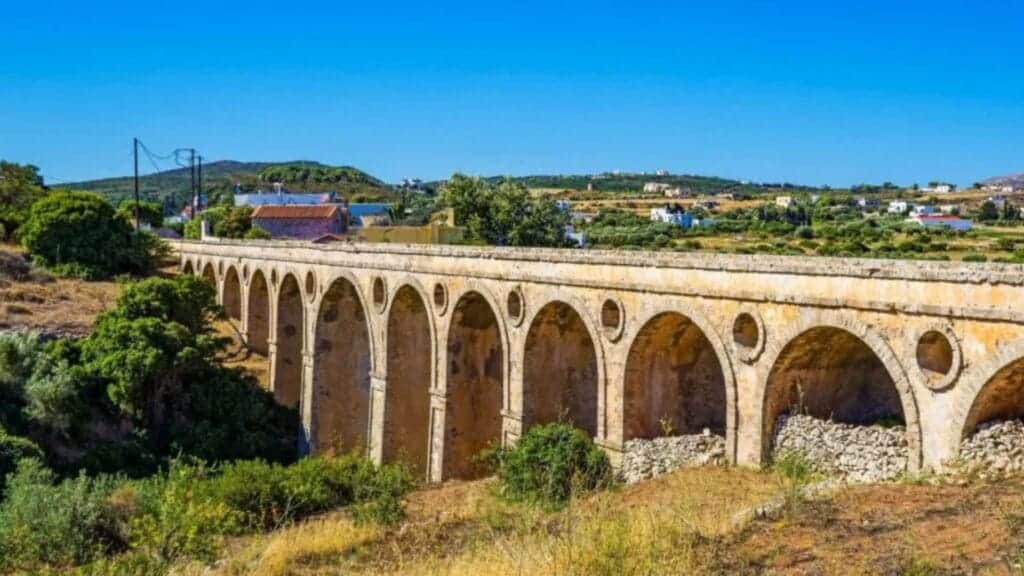
Kythira Island - Ancient times
According to Greek mythology, Kythira was the birthplace of the goddess Aphrodite, which is why there was a sanctuary in her honor on the island.
The history of the island began in the Minoan period (3000 BC - 1200 BC). In fact, the Minoans used Kythira as a way station on their journeys to the West. For this reason, they founded the settlement of ancient Scandia. .
In ancient times, Kythira was mostly under the control of Sparta, but it was also often inhabited by the Athenians, because it was in a very strategic position in the Mediterranean Sea. With the decline of Sparta and Athens, the island lost its importance, but continued to be inhabited, according to archaeological finds from the Hellenistic and Roman periods.
Kythira Island - Middle Ages
During the Byzantine period, Kythira was the episcopal seat. In the 7th century AD, the Byzantine Emperor Constantine presented the island to the Pope, who in turn handed it over to the Patriarchate of Constantinople. Around the 10th and 11th centuries, Kythira was considered an important power and became part of Monemvasia. Many Byzantine churches and monasteries were built at that time. In 1204, the Franks occupied Constantinople, as well as many islands. Marco Venius occupied the island in 1207 and became Marquis of Kythira. During the Venetian domination, the island was renamed Cherigo and divided into three provinces: Milopotamos, Agios Dimitrios (now Paleochora) and Kapsali. The Venetians noticed the strategic position of the island and as a result, they settled there and started building many fortifications around it. One of them is Hora Castle which still stands today.
The imposed feudal system and frequent pirate attacks disturbed the local population and caused a great decline in the population. In 1537, the capital city of Agios Dimitrios was destroyed by the pirates of Hayredin Barbarossa. The Venetians ruled Kythira until 1797, with one brief interruption during which the island was occupied by the Russians, in alliance with the Turks, an occupation that affected both the language and the architecture. In 1780, the islanders rebelled against Venetian oppression. On June 28, 1797, Kythira fell under French occupation, as well as the rest of the Ionian Islands, which established a democratic regime, giving hope for justice and freedom to the population. But a year later, they were attacked again by the Russians, supported by the Turks, who drove the French off the island.
Kitira Island - In recent years
On May 21, 1800, the Treaty of Constantinople established the semi-independent Ionian State (which also included Kythira) under the supervision of the Sultan. However, the nobility still retained their privileges. The bourgeoisie and peasants rebelled and attacked the small fortress of Castro, occupying it on July 22, 1800. This period is called the Period of Anarchy. With the Tilsit Agreement of 1807, Kythira came under French rule until 1809, when it came under English rule. On November 5, 1815, the Treaty of Paris established the Ionian state, confirming English occupation.
The inhabitants of Kythira participated in the Greek revolution against the Turkish occupation. Georgios Mormoris and Kosmas Panaretos are the two most famous warriors from Kythira. On May 21, 1864, the Ionian Islands were united with the rest of Greece. The wave of emigration intensified at the beginning of the 20th century when people left en masse for America and Australia.
During the First World War, Kythira participated in the political movement created by Eleftherios Venizelos, formed an autonomous administration and strengthened the allied forces. Occupation by Italians and Germans during World War II increased emigration, which became even stronger after the war. As a result, thousands of people living in Australia are of Kythira descent. Several thousand Kythiras settled in Athens and the city of Piraeus, where their families are active members of modern society.
🏨 Looking for the perfect accommodation? My guide to finding the perfect accommodation will help you find the best options for any budget or location!