Located in the heart of the Saronic Gulf, the island of Poros, Greece is a little Aegean gem! And the best part is that the ferry ride from Athens it only takes an hour, which makes this island very accessible, and therefore an ideal destination for short weekend breaks!
Lush vegetation, beautiful small beaches, picturesque villages and ancient aura make this island a unique place to visit during your vacation in Greece! The first thing that will stand out to you as you approach its port by ferry is the charming capital with its signature landmark, the Clock Tower. Built on a hillside, the city is one of the most picturesque island capitals in the Aegean Sea. It is the center of the island's activity, such as a series of traditional taverns and restaurants located along the promenade along the sea, which especially comes alive when the sun goes down.
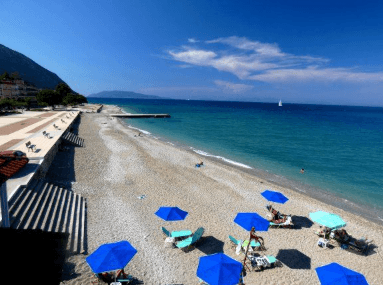
The main advantage of island beaches is their quality! Surrounded by lush vegetation, the sandy coves are easily accessible from the city, either by car and bus or by small boats that often depart from the port. Askeli, Love Bay and Neorio are the most popular beaches, and you can also find more secluded seashores to enjoy your privacy! Poros is ideal for a relaxing vacation, while the proximity of islands such as Aegina, Agistri and makes Spetses a perfect base for visiting other islands! Time to make Poros your next vacation destination!
How to get there and move around the island of Poros?
Traveling by car to the island of Poros, Greece
You can easily reach Poros by car from Galatas in the Peloponnese. If you are traveling from Athens, you need to drive on the Greek national road Athens - Corinth. After the Corinth Canal, you need to follow the route with the direction to Epidaurus and you will see the signs that lead you to Galatas. In the port Galatas you can board your car on the ferry that takes you to Poros within 10 minutes. In case you don't have your own vehicle, it's great the idea of renting it for your travels!
💸 Planning to rent a car? Take a look how to save money on car rental for your next trip for tips on how to keep your travel budget under control!
Accommodation, beaches and sights
History of Poros
Although small in size, Poros it hides an extremely rich history, intertwined with mythology, the sea and the fight for freedom.
Prehistory and mythology
According to the writings of Pausanias, Poros in ancient times consisted of two islands: Spheres i Calabria. Sferia, today's port and capital, is of volcanic origin and was created by the eruption of the Methane volcano about 100,000 years ago. Kalavrija was formed later, and the gap between the islands was filled with stream drifts over time, so in 1890 a bridge was built that connected them.
The name Spheria comes from Sphere, the charioteer of the mythical hero Pelops, while Calavria means "place of good winds".
The first traces of human presence date back to the Neolithic period, especially in the area where the famous one was later built Temple of Poseidon. During the early Helladic period, Poros was an important trading center, and findings such as seals indicate a developed administration and organized society. The island was also inhabited during the Mycenaean period, and numerous myths are related to Poros.
One of them talks about nymphs Scilly, who betrayed her father, King Megara, for her love for King Minos. When Minos rejected her, Scylla threw herself into the sea and drowned, and the cape on the island bears her name to this day. Another myth connects the island with Theseus, son of Poseidon and slayer of the Minotaur, to whom the Temple of Poseidon is dedicated.
Ancient times - Poros Island, Greece
In Mycenaean times (1400–1100 BC) Poros was a strong naval station, especially on the island Modi (Liontari), east of Kalavria. During the 7th century BC, the Temple of Poseidon was founded Kalaurian Alliance, an alliance of city-states (Athens, Aegina, Epidaurus, Hermione and others) for the protection of maritime interests.
In the 5th century BC, Poros participated in the Greco-Persian wars. Later, during the Macedonian domination, Poros witnessed the tragic end of the great orator Demosthenes, who committed suicide in the temple of Poseidon in 322 BC.
Under Ptolemaic rule, Poros retained its strategic importance, but never regained the glory it had enjoyed in earlier centuries.
🌍 Planning to drive abroad? See the article "Renting a car abroad: Everything you need to know before taking over the car“" for basic tips on how to navigate your trip with confidence!
The Middle Ages and the Venetian Age - Poros Island, Greece
From the Roman period (146 BC - 395 AD) until the early Byzantine Empire, Poros went through frequent attacks and natural disasters, such as a strong earthquake at the end of the 4th century. During the Byzantine era, the island was sparsely populated, but that's why it was a favorite hiding place for pirates.

Years 1484. Poros is being taken over Venetians, using it as a strategic base for fighting the Ottomans. At that time, the population grew and the island became an important commercial and maritime center. The Ottomans are only conquering it 1715, much later than other parts of Greece.
Thanks to its merchant fleet, Poros played an important economic role in the 18th century, although it never reached the power of Hydra and Speces. It gained special importance in 1774, when it was signed Kuchuk-Kajnardžija agreement which allowed Russia free passage through the Mediterranean. Then the famous is born Russian shipyard on Poros, today an important monument of the island.
The Greek War of Independence and Modern Times - Poros Island, Greece
During Revolution of 1821., Poros was of key importance. Merchant ships were converted into warships, and the island served as a strategic stronghold due to its proximity to the Peloponnese.
It is on Poros. In 1828, the first Maritime Academy of independent Greece was founded, next to the Russian shipyard. The island was also the seat of important political negotiations: in September 1828, the ambassadors of England, France and Russia met here with Kapodistrias, the first governor of Greece, to determine the borders of the new Greek state.
After the foundation of modern Greece in 1830, the importance of Poros decreases, but it remains a symbol of the maritime tradition and the place where the history of the Greek people was created. Today, apart from its cultural and historical importance, Poros is also known as one of the most beautiful islands of the Saronic Gulf, attracting visitors with its beaches, pine forests and rich tradition.