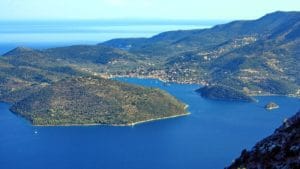
Lipsey Island is a small island of the group Dodecanese, on the eastern side of the Aegean Sea. Its capital is the island's center of activity. The main port of the island is located there, where ferries from Piraeus and other islands of the Dodecanese. In the city you will find most of the hotels, restaurants, shops and other facilities that will make your stay as pleasant as possible.
There is a public bus that departs from the capital and offers routes to the island's beaches. So, the city of Lipsey is, in many respects, one of the best places to stay. Near the town there are two popular beaches on the island: Lientou and Kambos, where there are also several accommodation facilities.

The sea shores of the island stand out for their crystal clear sea, peaceful atmosphere and breathtaking natural beauty. Most beaches are unorganized, so they retain their pristine charm and relaxed atmosphere, rewarding visitors with long relaxing days at the beach! For those looking for complete seclusion, Lipsy is full of charming secluded beaches that can be reached on foot or by bus from the city.
If you are looking for a Greek island destination off the beaten tourist track, Lipsi in Greece could be the perfect choice for you!
How to get to and around Lipsey Island?
✈️ Need help booking your next flight? Check out my guide to flight booking for the best platforms and tips to find unbeatable deals and hassle-free travel experiences!
Accommodation, beaches and sights
Discover Makronisi, Aspronisi, Tiganakia, Marathi and Arkoi
Apart from the main island, a stay on Lipsi can be completed with a trip to the surrounding islands and coves. Among the most beautiful places to visit are Makronisi, Aspronisi, Tiganakia, Marati and Arkoi, which are known for their crystal clear sea, peaceful atmosphere and beautiful landscapes. Tiganakia especially attracts attention with the turquoise color of the sea, while Makronisi and Aspronisi are excellent for swimming and enjoying the natural beauty. Marati and Arkoi offer an authentic island ambience and are a good choice for those who want to discover a quieter, lesser-known side of the Dodecanese during their vacation. The easiest way to get to them is an organized boat trip from the port on Lipsi.
Lipsey Island - History of the Island
History of the island Lipsi it is closely related to the fate of the other Dodecanese, especially the neighboring ones Patmos.
According to archaeological excavations, the island was inhabited as early as prehistoric times by the tribe Kari. During ancient times, Lipsi was developed enough to possess fortified city (4th century BC), whose remains confirm the island's importance in local commercial and maritime life. Many were also found inscriptions, vessels and ceramics, and some of those finds are kept today in to the small museum of Lipsia, Archaeological Museum of Rhodes i National Archaeological Museum in Athens.
It seems that the island is its largest flourished during the Hellenistic period, when trade was developed thanks to its strategic location between the larger islands of the Dodecanese.
Lipsi Island - Byzantine period
U 11th century, Lipsi came under Byzantine rule and was assigned together with Patmos Osios Christodoulou, to the monk to whom the emperor Alexius I Komnenos entrusted the management of the islands. Then numerous monks from Patmos came to Lipsi, and it was founded Monastery of Panagia Haru, dedicated to the Mother of God, which is still considered the spiritual center and protector of the island.
Lipsi Island - Ottoman era and new settlements
At the time Ottoman occupation of Crete (1669), many Cretans left their homes and sought refuge in the Dodecanese. One of them, Elias from Crete, he founded the capital of the island - today Lipsi city. During Ottoman rule, the island shared the fate of the rest of the Dodecanese, but retained its traditions and identity.
Modern period
Like the whole group of islands, Lipsi came under Ottoman rule after centuries Italian control (1912), then briefly under German and British rule during World War II. Finally, 1948, along with the rest of the Dodecanese, is officially united with Greece.
Emigration and the present day
At the beginning 20th century, the island was engulfed by a wave of emigration - many locals moved to Australia i USA in search of a better life. Nevertheless, the emigrants remained connected to their homeland and financially supported the development of infrastructure: the construction and reconstruction of roads, schools and churches, including the restoration of the church. Saint John the Theologian.
Today, there is a permanent eye on Lipsi 700 inhabitants, and the main economic sectors are fishing, agriculture and tourism. Thanks to its untouched nature, hospitality and peaceful atmosphere, the island is becoming an increasingly popular destination for visitors looking for an authentic experience away from mass tourism.