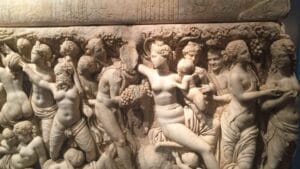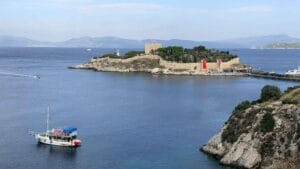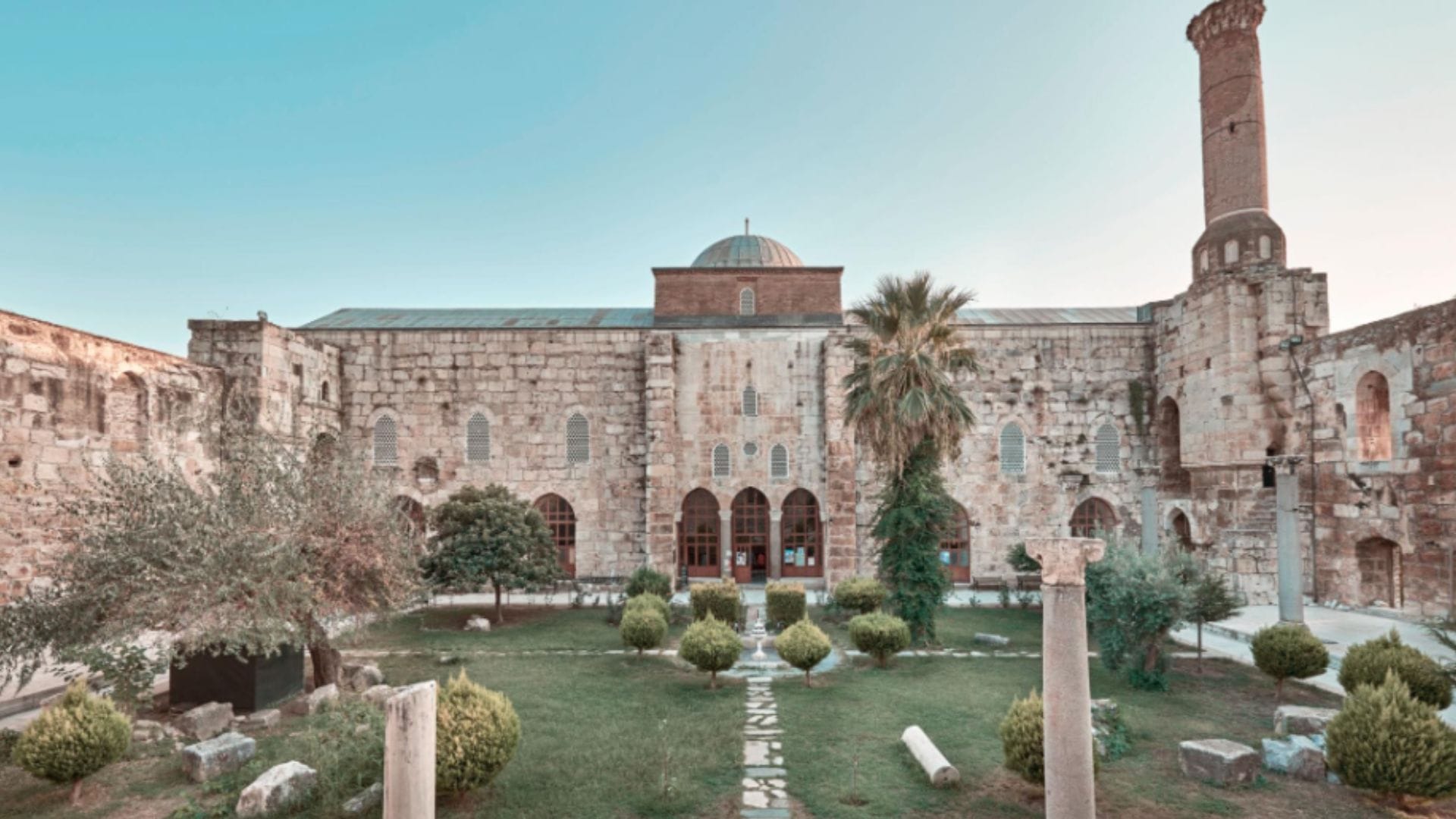
Isa-bey's mosque is a historical mosque from the 14th century Selcuk. Built directly at the foot of Ayasoluk hill, in the immediate vicinity of the ruins of the Temple of Artemis and Basilica of St. John. It is one of the oldest and most important examples of Islamic architecture in Anatolia. At that time, it was one of the most monumental mosques on the Aegean coast. What is particularly fascinating is that it was built literally from the materials of ancient Ephesus. Its columns, capitals and stone blocks previously stood in Roman temples, baths and public buildings. The layers of history here are literally built into each other.
👉 Don't let the lack surprise you internet while exploring the world! Read the whole text and find out which ones are the best internet access applications for carefree and safe travels.
Historical context
In order to understand why this mosque was built right here and right then, it is necessary to take a brief look at the turbulent 14th century in Anatolia. After the collapse of the Seljuk Sultanate in the early 14th century, the Asia Minor peninsula disintegrated into a series of smaller emirates that competed for power, territory and prestige. One of these emirates was the Aydinoglu, based in Aydin, which controlled the fertile Meander River valley and the Aegean coastal cities—including Selçuk, which was then an important commercial and administrative center of the region.
Emir Isa Bey, the ruler of Aydinoglu in the second half of the 14th century, commissioned the construction of the mosque in 1374 as a religious, cultural and political symbol of his emirate. He was an ambitious endower—the mosque was meant to demonstrate the power and sophistication of his rule, but also to attract scholars, merchants, and pilgrims to the city. Ali ibn Muşaymish, a craftsman originally from Damascus, was hired as the architect, which explains the strong Syrian and Persian influences in the architectural solution, which are clearly different from purely Seljuk patterns.
Just a few decades after its construction, Aydinoglu Emirate falls under Ottoman rule. The mosque continues to function, but its political and cultural luster is fading. Over the following centuries, it suffered damage from earthquakes, was periodically used as a caravanserai and warehouse in the Ottoman period, and at one stage even as a stable. Systematic restoration began in the 20th century and continues in stages to this day.
Personal experience: When I read that the columns in the interior were brought directly from ancient Ephesus, I began to look at them differently. On one pillar you can see a fine Ionic capital that 2000 years ago supported the roof of a Roman temple. Now it carries the vault of the mosque. That physical, tangible connection between civilizations remains in the memory.
Architecture and appearance
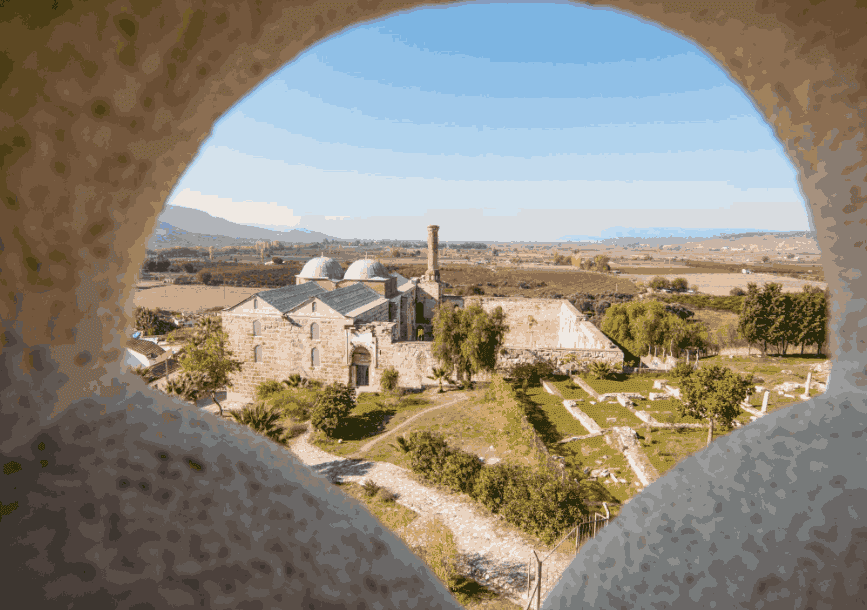
Isa Bey's mosque immediately catches the eye with its size and elegance — it is not a modest masjid, but a monumental building that, even in a partially restored state, leaves a strong impression.
Exterior and yard
The mosque is surrounded by walls that define a spacious inner courtyard—a feature more typical of Syrian and Persian mosques than of Anatolian Seljuk buildings of the same period. This courtyard, with porches that once surrounded it on three sides, served as a place of rest, study and gathering of believers.
The central part of the courtyard was decorated with a shadrvan — a fountain for ablution (ritual washing before prayer). The original fountain has not been preserved, but the foundations are visible. Along the walls of the courtyard stand tall columns of Roman origin with Corinthian capitals — brought from the excavations of Ephesus and installed with great care.
The western facade, which faces the entrance, is the most representative part of the exterior. It is decorated with detailed carved arabesques, geometric motifs and an inscription in Arabic that records the name of the benefactor, the architect and the year of construction. This inscription is an extremely valuable historical document — one of the few with the direct names of the builders from the period.
Prayer area
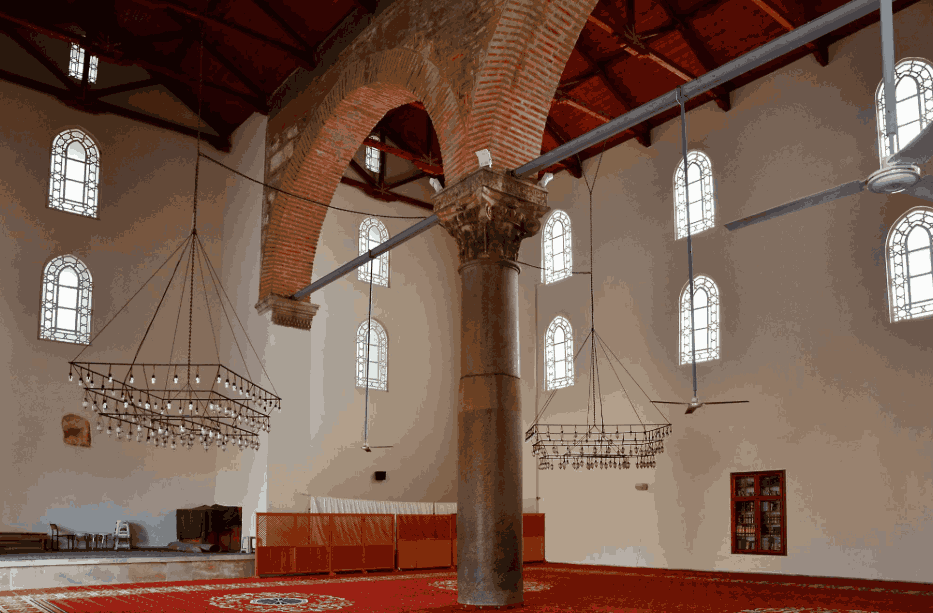
The inner prayer space is divided into two traves, each of which carries a dome. This was an unusual choice for mosques of the period and shows the architect's individuality and technical prowess. The domes are supported by massive walls and arches, and the interior is illuminated through double rows of windows that let in abundant light.
The columns that divide the side aisles from the central one — there are twelve of them in all — are real historical documents in themselves. They come from different ancient buildings of Ephesus and are not uniform: some are of gray granite, some of white marble, with different heights and capitals. The architect connected them with the help of metal ties and adjusted the height of the bases, achieving visual coherence despite the variety of materials.
The mihrab — a niche that marks the direction of Mecca — is made of white-gray marble with fine carved decoration. The pulpit (pulpit) is wooden, simple and beautiful in its lightness.
Personal experience: I entered the mosque between two prayers, when it was almost empty. I sat by one of the Roman columns and listened to the wind blowing through the open windows. In silence, without guides or loudspeakers, realize how well this space is designed — light, proportions, acoustics. The architect from Damascus knew what he was doing.
Minarets
Originally, the mosque had two minarets over the western facade — an oddity for Anatolian mosques at the time. Of the two original minarets, one was almost completely demolished, and the other was preserved up to the part above the first balcony (sherefet). Their hewn stone base shows a high level of craftsmanship.
Materials and construction
One of the most interesting dimensions of Isa Bey's mosque is its relation to the ancient ruins. Construction in the 14th century took place on a site that was literally littered with materials from abandoned Ephesus — marble blocks, columns, architraves, capitals. Instead of bypassing or ignoring them, builders consciously and systematically incorporated them.
This was not mere economy. There is an interpretation that the use of ancient material also had a symbolic meaning — the new faith builds on the foundations of the old power, the new ruler takes over and transforms the legacy that precedes him. A similar logic is visible in many Islamic and Christian churches throughout the Mediterranean, which were built with the material of earlier cults and civilizations.
The mosque today
The Isa Bey Mosque is not a museum — it is a living, active place of worship where prayers are regularly performed. Tourists are welcome throughout the day, but during prayers (five times a day) the interior is not accessible to visitors. Entry is free, but appropriate clothing is expected — shoulders and knees are covered, women also cover their heads. Scarves can be borrowed at the entrance.
Restoration works have limited access to parts of the mosque in certain phases. The state of conservation has improved considerably in recent years, but the mosque still bears traces of centuries of neglect — therein lies part of its authenticity.
Personal experience: I left the mosque directly towards the Temple of Artemis — only about a hundred meters away. You are standing between a pillar that is the rest of an ancient temple and a mosque built of similar pillars. About thirty meters up, on the hill, are the ruins of the Basilica of St. John. At one point you walk between three religions and three civilizations at once. Few places in the world offer such an experience.
Practical advice
The mosque is located a few hundred meters west of the center of Selcuk, a ten-minute walk away. It is easily combined in one walk with the Temple of Artemis (right next door), the Basilica of St. John (on the hill above) and the Museum of Ephesus (in the city center). Parking is available along the road below Ajasoluk Hill.
Photography of the interior is allowed, but without flash and with discretion — especially if believers are present. The mosque is open all day and admission is free, making it one of the few attractions in the region without a charge.
Isa-bey's mosque is not visited as much as Ephesus or the Museum, and that is precisely why it is special. It provides that rare feeling of authentic discovery — monumental, quiet, layered and deeply embedded in a landscape that is itself a multi-layered history book. Whoever skips it in the rush to Ephesus has missed one of the most impressive places in the region.