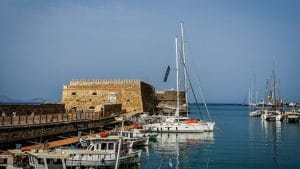
Island Lesbos in Greece (also known as Mytilini after its capital) is the third largest Greek island, located in Eastern Aegean Sea, not far from the coast Turkey. This island is a real gem for those who want to combine history, nature and a peaceful vacation. It is a popular destination for families, but also for travelers who want to explore places away from the crowds.
Lesvos is famous for mastic, top quality olive oil, medieval castles, unique villages and untouched beaches. Every trip here brings an opportunity to pass through historical traces from ancient times, Byzantine monasteries and castles, to modern resorts with traditional taverns and warm hospitality.
The villages stand out in particular. Molivos, Peter, Kaloni, Skala Sikamnias and of course Mytilene, where visitors can enjoy a mix of authentic architecture, cultural monuments and the colorful life of the local population. Don't miss to visit:
- Medieval castles Mytilene, Molyvos and Sigria, which for centuries guarded the island from pirates.
- Petrified Forest in Sigri, formed 15-20 million years ago, today one of the few geological wonders under the protection of UNESCO.
- Ipsilo and Saint Raphael monasteries, spiritual centers of the island and important pilgrimage sites.
Lesbos is a destination where history, nature and tradition perfectly intertwine - an island that offers peace, but also plenty of opportunities for exploration.

How to get to Lesbos
💸 Planning to rent a car? Take a look how to save money on car rental for your next trip for tips on how to keep your travel budget under control!
Accommodation, beaches and sights
History - The island of Lesbos in Greece
According to ancient Greek mythology, Lesbos is associated with a famous poet and lyricist Orpheum, whose music touched every being. After his death, the waves, according to legend, carried his head and lyre to the shores of Lesbos, where the locals placed the relics in the temple of Apollo as a sign of respect. Because of this, the island is often considered a place of special musical and poetic inspiration. It is no coincidence that Lesbos is also associated with Sapfu, one of the most famous poets of antiquity, born on this very island in the 7th century BC.
Archaeological research confirms that the island has been inhabited since Neolithic, and an advanced civilization developed during the Bronze Age.
Wide selection of houses, apartments and villas for vacation that provide unforgettable experiences and amenities, including more space and added privacy, for less money than a traditional hotel accommodation.
The island of Lesbos in Greece - Ancient period
- 1507 BC. – they come to the island Pelasgians, the first known inhabitants.
- 1393 BC. – they inhabit it Achaeans, and about 1100 BC. they are coming Aeolians, who gave a strong cultural stamp to the island.
- 7th century BC. – Lesbos becomes center of art, literature and philosophy; Sappho and Alcaeus are among the most famous personalities of that era. The island develops a powerful fleet and trade.
- 6th century BC. – Lesbos is conquered Persians.
- 479 BC. – enters the composition Delian League under the leadership of Athens.
- 334 BC. – becomes part of Macedonian Empire Alexander the Great. After his death, it comes under the government Ptolemy in Egypt.
- 88 BC. – the island is conquered Rome and since then it has been part of the Roman Empire.
Byzantine and medieval period
After the division of the Roman Empire, Lesbos became a part Byzantium. However, the island was often attacked Saracens and Latins.
- 1261. - officially returned to Byzantine rule.
- 1354–1462. - Lesvos was under control Genoese, who left a strong mark in the organization of trade.
- 1462. – they conquer it Ottomans, under whose rule it remains for almost five centuries. They were built at that time the castles of Mytilene, Molyvos and Sigri, which still preserve the memory of the turbulent past.
Despite the Ottoman rule, the islanders managed to preserve their faith and identity. Monasteries and churches became centers of education, and Greek culture was preserved in secret schools.
👉 Don't let the lack surprise you internet while exploring the world! Read the whole text and find out which ones are the best internet access applications for carefree and safe travels.
New century and modern history - Lesbos island in Greece
- 1824. - the inhabitants of Lesbos raise an uprising against the Ottomans, but it is bloodily suppressed.
- November 8, 1912. – in The First Balkan War, the island is liberated by the Greek fleet under the command of the admiral Pavlos Koundouriotis.
- 1922. - a large number of Greek refugees from Asia Minor come to Lesbos after the disaster in Smyrna, bringing a new cultural and economic momentum to the island. As a sign of memory, a monument was erected in Mytilene To the Asia Minor mother.
- 1923. - The Lausanne Peace Treaty confirms the unification of the island with Greece.
- 1941–1944. - Lesbos was occupied by German forces during the Second World War, until liberation September 10, 1944.
The island of Lesbos in Greece - Cultural heritage and significance
Lesbos has been for centuries the center of literature and art - from Sapphine's lyrics, through philosophical schools, to colorful Byzantine and Ottoman monuments. Today, the island preserves a rich heritage through museums, castles, monasteries and festivals. Its history is a blend of myths, art and the struggle for freedom, making it one of the most authentic Greek islands.