Island Ikaria is one of the most special islands of Greece, located in the eastern Aegean Sea. Unlike popular islands like Mykonos or Santorini, there is no glamour, luxury resorts and overcrowded beaches here. Ikaria is a symbol of authenticity and relaxed life - an island where time runs slower and life is measured by laughter, wine and longevity.
The island is known around the world because its inhabitants are among the longest-lived people on the planet. The secret of a long life lies in a healthy Mediterranean diet, daily walks, absence of stress and a rich social life. If you want to feel the real "slow living", Ikaria is a destination you must experience.
👉 Don't let the lack surprise you internet while exploring the world! Read the whole text and find out which ones are the best internet access applications for carefree and safe travels.
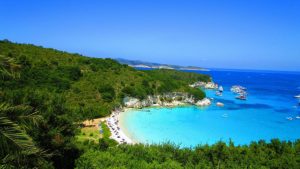
In addition to traditional feasts and excellent wines, Ikaria boasts unspoiled natural landscapes, mountain villages, hot springs and breathtaking beaches. Some of the most famous are Seychelles, Mesakti, Us i Meadows. For the more adventurous, there are hiking trails like the gorge Hallari, which ends at the beautiful Nas beach, one of the most beautiful places to watch the sunset.

Villages Armenistis, Manganite i Karkinagri they reveal the soul of the island - authentic taverns, friendly people and a slow pace of life that will win you over at first glance.
How to get to Ikaria and move around Ikaria?

💸 Planning to rent a car? Take a look how to save money on car rental for your next trip for tips on how to keep your travel budget under control!
Accommodation, beaches and sights

History – Island of Ikaria
According to ancient Greek mythology, the island of Ikaria owes its name Egg, the son of Daedalus - the great architect whom Minos, the king Crete, hired to build the famous labyrinth in which the Minotaur was imprisoned. After they discovered the exit from the labyrinth, Minos forbade Daedalus and his son to leave Crete. To escape, Daedalus made wings of wax and feathers. Icarus, ignoring his father's advice, flew too high, approaching the sun. His wings melted and he fell into the sea that today bears his name - Icarian Sea, and the island was named in his honor Ikaria.
Ancient period
Archaeological findings show that Ikaria was inhabited as early as 7th millennium BC.. During 6th century BC. the island was dependent on Samos, but soon developed and became famous for its own thermal springs, which are still used today.
After the Persian Wars, Ikaria joined To the Delian League, and during the period of prosperity, numerous temples were built, such as Temple of Artemis in Nassau, one of the most important sanctuaries of that era. The island's prosperity declined sharply during Peloponnesian War, when Ikaria was exposed to pirate attacks and robberies.
At the end 4th century BC., the island joined Second Athenian League, and around 230 BC it fell under the rule of the Romans, when it was included in the Roman province Asia, along with Samosa.
Byzantine period - Island of Ikaria
From 3rd century AD., Ikaria was part of the Byzantine Empire. The remains of several have been preserved from that time Byzantine castles and odeons. Due to the frequent attacks of pirates, the inhabitants are during 12th century left the coast and retreated to the interior of the island. They built for protection Koskina Castle, which still bears witness to that period.
After the fall of Byzantium in 1204, the island briefly came under the rule of the Latin Empire in Constantinople, then during the 14th century it became part of Genoese Aegean Empire. Not long after, they took over the government Knights with Rhodes, in order to conquer the island in 1521 Ottoman Turks.
From the Ottoman occupation to liberation
The inhabitants of Ikaria offered strong resistance to the Ottomans. They participated in to the Greek War of Independence in 1821, and in 1827 they managed to break away temporarily. However, By the London Protocol of 1830. it was decided that the northeastern Aegean islands, including Ikaria, would remain under Turkish occupation.
Day July 17, 1912, the Icariotes revolted, expelled the Turkish officials and declared the independence of the island themselves. However, just a few months later, on November 4, 1912, the Greek army officially liberated Ikaria, which was then annexed to Greece.
Contemporary History - The Island of Ikaria
The inhabitants of the island often resented the weak investment of the central Greek government, so they developed a strong sense of independence. They received great help from emigrants from Ikaria in the USA and Australia, who sent money and built schools, churches and roads.

In the 20th century, Ikaria also had its dark side of history - during period of dictatorship in Greece, especially between the 1940s and 1973, the island was used as a place of persecution political prisoners, mostly communists.
Today, Ikaria is known throughout the world as an island long-lived people, unique culture and authentic way of life that resists modern trends.