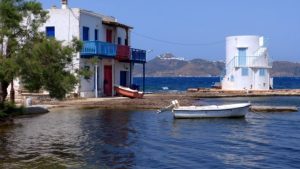
Kalavryta, Greece is a mountain town on the northern side of the Peloponnese. This city has historical significance because one of the most cruel massacres took place in it during the Second World War, when Nazi troops killed the entire male population. As history says, on March 25, 1821, the Greek revolution against the Ottomans was declared in Kalavrita, the monastery of Agia Lavra.
Today, the town of Kalavrita has developed as a major winter destination in Greece thanks to the ski center on the slopes of Mount Helmos. The center has 12 tracks with a total length of 20 km and 7 ski lifts, suitable for both beginners and advanced skiers.
Many interesting monasteries and other sights can be visited during your vacation in Kalavrita, while hiking through the Vouraikos Gorge will lead you to places of incredible natural beauty. Skiing and hiking are the main things to do in Kalavrit.
How to get to Kalavryta?
Kalavrita, Greece - Accommodation
The most suitable places to stay are located in and around the town of Kalavrita. This town has a lot to offer and is a good base for trips to the ski resort. Many hotels are built in traditional stone architecture and have a fireplace. Some hotels offer more luxurious amenities, such as indoor pools and spa treatments.
👉 Don't let the lack surprise you internet while exploring the world! Read the whole text and find out which ones are the best internet access applications for carefree and safe travels.
Kalavrita, Greece - Sights and attractions
Located in a valley between high mountains, on the northern side of the Peloponnese, Kalavrita is a small but beautiful town that attracts most tourists because of its ski center and its historical past. In fact, in 1943, Nazi troops killed the entire male population of Kalavrita.
At the site of the Kalavrita Holocaust, on a hill above the city, there is a Holocaust Memorial that was created to remind all visitors of the value of peace. Very interesting places in Kalavrita are the Mega Spileo Monastery and the historical Agia Lavra Monastery, where the Greek Revolution was declared in 1821.
Below you can see the best locations in Kalavrita. .
Helmos mountain ski center - Kalavrita, Greece
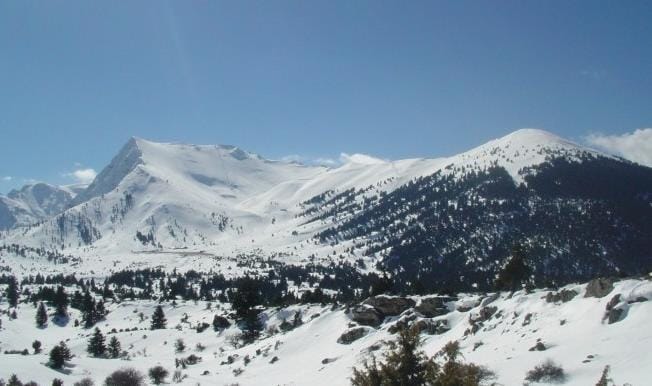
Kalavrita is located only 15 kilometers from Kalavrita, on Mount Helmos Ski center, an extremely popular ski resort equipped with all modern amenities. There are ski shops, restaurants, a cafeteria and even a medical center. It offers 12 trails with a total length of 20 kilometers, 7 ski lifts that can accommodate up to 5,000 people per hour, and ski trails for all levels of skiers.
The Helmos mountain ski center in Greece is one of the best winter vacation spots in Europe. The ski center also has a modern cable car system, which allows fast and comfortable transportation to the top of the mountain. With a height of 2340 meters, Mount Helmos offers a spectacular view of the surrounding countryside, as well as the famous Lake Doxa.
The ski center also offers numerous other activities, such as sledding, snowboarding, hiking and snowmobiling. For those who want to relax after a hard day on the snow, the ski center also has a wellness center with a swimming pool, sauna, hydromassage and gym.
In the ski center there are also various restaurants, cafes and bars, where you can enjoy delicious Greek food and drinks. The ski center on Mount Helmos in Greece is an ideal place for all lovers of winter idyll and adventure.
Skiers are advised to rent equipment in town rather than at the resort, as prices can be prohibitive there. Also, the resort is extremely popular and can be crowded at times. Picturesque slopes and breathtaking views are the hallmarks of this magnificent ski resort. Quite popular with locals and tourists alike, be sure to book in advance if you're visiting and want to stay overnight.
Mega Spileo Monastery - Kalavrita, Greece
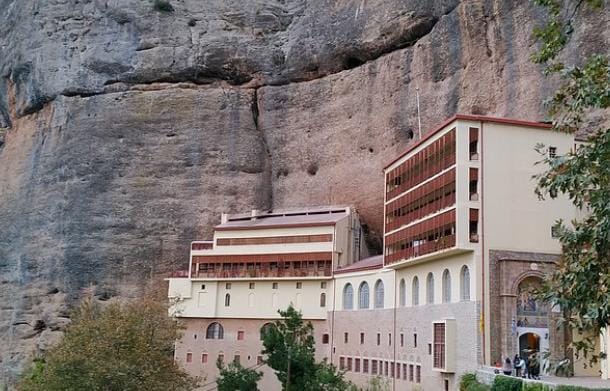
The holy monastery of Mega Spileo is located 10 km from the town of Kalavrita. It is located on the central road leading to Kalavrita and is geographically close to the village of Zahloru. It was built on the slopes of the steep side of a rocky hill, at a height of 924 m, from which there is a beautiful view.

The architecture of the monastery resembles a fortress and has eight floors. The monks' cells were built around the cave. Mega Spileo Monastery was originally built by two brothers Simeon and Theodore in 362 AD when a shepherdess found an icon of the Virgin Mary in a cave. The icon is made of wax and mastic and is believed to have been painted by the apostle Luke.
The Mega Spileo Monastery was burned down in 840 AD by a religious group known as the Ikonomasi. It was restored in 1285 by Emperor Andronikos Paleologus, but during its history it suffered many devastating fires. Namely, in a fire in 1600, the valuable monastery library, which had rare manuscripts, burned down. A second fire in 1934 destroyed some precious relics.
Two years later, the monastery was rebuilt, but in 1943 it suffered a new destruction: Nazi German troops, after the Kalavrita massacre, set fire to the Mega Spileo monastery and killed its twelve monks and its staff, shooting them or throwing them off the rocks. Some managed to survive, hiding in nearby caves after taking a few valuable icons with them.
Today, despite all these damages, the Monastery of Mega Spileo is an imposing building with a 17th-century church, which contains extraordinary frescoes, mosaic floors and bronze doors with relief decoration. The monastery also houses a museum that displays carved wooden crosses, ancient manuscripts and the Holy Gospels. A good number of his important relics are kept in a special hall. Mega Spileo Monastery celebrates every year on August 15, the name day of the Blessed Virgin Mary, who is the patron of the monastery.
Holocaust in Kalavrita
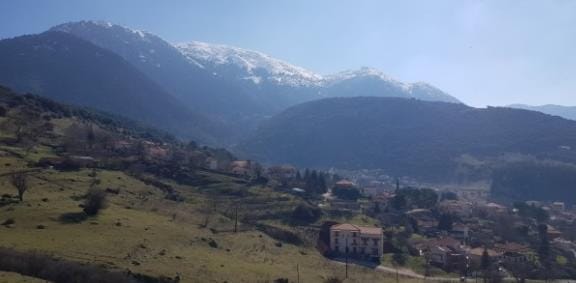
The town of Kalavrita suffered a holocaust that is considered one of the most cruel crimes of the Second World War in Europe. The German Operation Kalavrita began in October 1943, when Greek forces defeated Nazi troops at the Battle of Kerpini village and captured 80 German soldiers. Nazi forces asked Greece to release the prisoners and threatened to execute the population of nearby villages in revenge. However, the resistance leadership refused to release the Germans, despite the intervention of the Church.
On December 8, German troops destroyed the villages of Kerpini and Pogi and killed their male population; after this, the Greek forces executed the German prisoners, only one of them managed to escape. In the following days, the Germans entered Kalavrita looking for Greek soldiers.
Although the villagers confirmed to them that the Greek forces had left, on Monday, December 13, 1943, Nazi troops ordered all residents to come to the school yard. They locked the women and children in the school and gathered all the male inhabitants, over the age of 12, on Kapi Hill, outside the city.
They set fire to the school and killed almost all 700 men; only 13 of them managed to survive. The women and children imprisoned in the burning school could see their husbands, sons, fathers and brothers being killed, and the men from the hills burning their mothers, wives, sisters and daughters in the school. Finally, the women managed to escape from the burning building. It is said that an Austrian soldier took pity on them and helped them out.
The following days were terrible: women had to bury their loved ones and family. In the following days, the Germans continued with their cruel operations and destroyed the nearby villages, the monasteries of Agia Lavra and Mega Spilaio and killed most of the inhabitants.
Memorial
Today, on the top of Kapi Hill, where the men were killed, there is a memorial dedicated to the Holocaust, decorated with a large white cross. There are also plaques inscribed with the names of these men and a chapel, which includes a plaque with each man's name and year attached to a candle that burns for him.
The city's cathedral was rebuilt after the massacre, but the left clock remained stopped at the time the crime was committed, at 2:34 p.m. Furthermore, the school where the women and children were imprisoned currently houses the Kalavrita Holocaust Museum, founded in 2005, which houses items from the Nazi occupation, as well as photographs, old newspapers and documents commemorating the execution.
Some floors of the school are still on fire, as part of the memory. This massacre shocked Europe and united the Greeks.
Lake Kastria Cave - Kalavrita, Greece
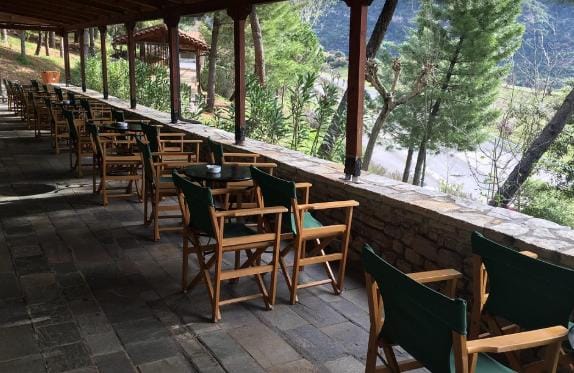
Lake Kastria Cave is an incredible natural wonder. It is actually divided into three caves, which are interconnected by many corridors surrounded by strange stalactite formations. The cave is a long, underground river that forms many small lakes.
The cave is about 2,000 m long, but you can only walk 500 m. Cross narrow corridors and man-made bridges that cross the lake and see amazing stalactite and stalagmite formations. In winter, when the snow melts, natural waterfalls are formed. In the summer, part of the cave dries up and reveals new stalagmite formations. The natural entrance is right on the road, while another artificial entrance is a few meters away.
The cave was discovered in 1967 by local shepherds, and its development began in 1981. Today it belongs to the municipality of Lefkassio. It is located 20 km from Kalavrita and 9 km from the village of Klitoria.
Monastery of Agia Lavra - Kalavrita, Greece
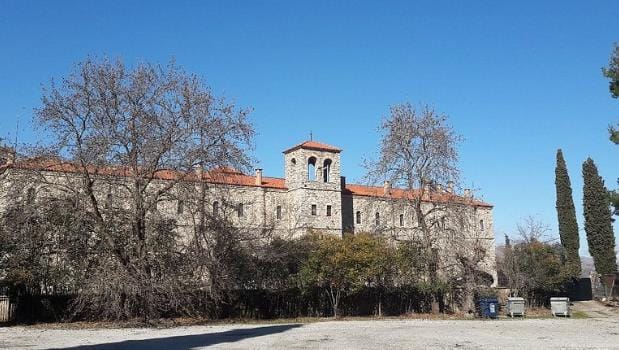
The monastery of Agia Lavra is located among trees and lush vegetation, 5 km from the town of Kalavrita. It consists of an imposing group of buildings, at an altitude of 961 m, which offers an open view of the valley of the Vouraikos River. On the right side of the palace is the famous small chapel where the Greek revolution of 1821 against the Turks was proclaimed.
However, this is the third version of this monastery, since the first was burned by the Turkish leader Ibrahim Pasha, and the second was destroyed by an earthquake, fires and German troops in 1943. The monastery of Agia Lavra was founded by the monk Eugene Askitis in 961 BC in the nearby area of Paleomonastiro.
The monastery went through a lot of destruction from the Turks, earthquakes and fires. The last destruction was in 1943 when Nazi troops burned the building and killed three monks who refused to leave the monastery. Finally, in 1950, the Agia Lavra monastery was rebuilt with donations from pilgrims and with the support of the Greek state.
Fortunately, some important historical objects survived these tragic events. In the monastery, you can see the first Greek flag, the Flag of the Revolution, which was raised to declare the Greek War of Independence on March 25, 1821.
There is also a collection of paintings by Agios Panteleimon dating from the 17th century, as well as a diamond-encrusted gospel, a gift from the Russian empress Catherine the Great. There are also many icons and religious carvings. Every March 25, the Agia Lavra Monastery celebrates Greece's independence from the Turks by reenacting the gathering of Greek leaders and raising the flag of the Revolution.
Vouraikos Gorge - Kalavrita, Greece, Peloponnese
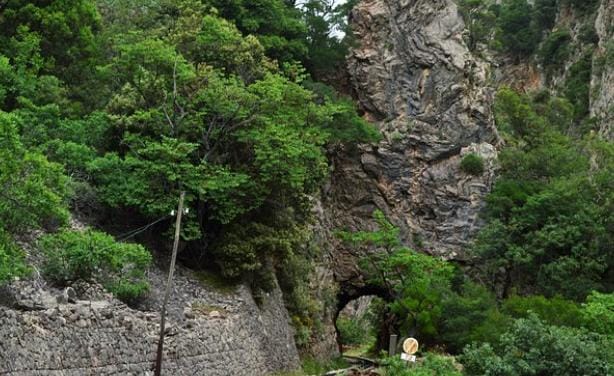
The Vouraikos River flows between the eastern side of Mount Erymantos and the western side of Mount Helmos. This 40 km long river creates a deep gorge. According to mythology, Hercules was in love with Voura, the daughter of Nepheligeretes and Elikia, who lived in the sea. Then he opened this passage to reach the sea and met her. The river was named after her.
The gorge begins about 3 kilometers south of the village of Kato Zahloru and stretches between Diakofto and Kalavrita. Many streams enter the Vouraikos River at different points and create numerous waterfalls. The width of the gorge varies in different places. The gorge is very important for the natural habitat of the region and has a variety of flora and fauna.
The funicular also takes you through this picturesque gorge, on the way to Kalavrita.
Monastery of Panagia Makelaria – Kalavrita, Greece
The monastery of Panagia Makelarias is located near the village of Lapanagi, approximately 30 km from the town of Kalavrita. The monastery is dedicated to the Assumption of the Blessed Virgin Mary. According to one inscription, the monastery was built in 532 by the general Belisarius Justinian.
Panagia Makelarija has a small Byzantine church in its center, with a beautiful wood-carved screen, on which the icon of the Virgin is placed. This is an authentic Byzantine work of art, with a characteristic feature: wherever you stand, the Virgin's eyes follow you. The holy icon of the Virgin, together with a pot full of olive oil, was found in the 15th century in the vicinity of the monastery.
The monastery was originally known as Panagia Lithostrotiotissa, which means Virgin with stones, but it was named Panagia Makelarias, from the word makelio (destruction in English), when the Turks burned the monastery in 1458. The Makelarie Monastery preserves some precious exhibits, such as the Holy Icon of the Virgin Mary and some weapons and clothing of the fighters of the Greek Revolutionary War.
In 1980, some significant objects were stolen from the monastery, such as gold and silver Byzantine gospels, Byzantine icons and, above all, a handmade Russian box containing a piece of Jesus' crown of thorns. Near this monastery is the Transfiguration Chapel, built in a small cave. Holy water continuously flows from a stone near the chapel. .
Palaeologina Palace in Kalavrita, Peloponnese, Greece
The impressive Palaeologina Palace is believed to have been built by Thomas Palaeologus after the destruction of the massive Frankish fortress by Geoffrey de Tournai. In 1440, Constantine Palaiologus, brother of Thomas Palaiologus and Byzantine Emperor, gave the castle to Princess Aikaterina Palaiologus, their distant relative. Mr. Vassilios Caparas, who was the last owner of this magnificent architectural beauty, donated it to the municipality of Kalavrita, to be used as a cultural center.
It is interesting that not even a small part of this palace was destroyed during the war for the revolution and that it remained almost intact. It only retains the natural damage caused by time. Today, the palace hosts several cultural activities, such as exhibitions, conferences and meetings. After the final restoration by the Laboratory of Architecture and Design, the palace has now become an important part of the Kalavrita cultural society and hosts many events, such as exhibitions, theater performances and cinema screenings.
Orias Castle in Kalavrita, Peloponnese, Greece
The medieval castle of Kalavrita is called by the locals Kastro od Orija, which means Castle of the Beautiful Lady. It is located on a rocky mountain, at an altitude of 1100m. It got its name from the event that happened in this castle in 1463, when the beautiful Aikaterini Paleologu threw herself from the castle, so as not to be captured by the Turks.
This castle was built in 1208 by the Frankish de Tourne family, who ruled the entire Calavrita area. Although this structure is partially demolished today, there is a large part that remains in good condition. Keep in mind that in this castle, in March 1821, the Greeks fired the first cannon that marked the beginning of the Greek Revolution against the Turks. The castle can be reached east of the town of Kalavrita, about 1 hour's drive. The castle is almost destroyed, but traces of Venetian architecture are still visible.
If you are looking for the fastest and most reliable way to get from the airport to your hotel or apartment, read my guide „"Airport Transfer - Best Transfer Booking Apps and Sites"“. Find out how to book a transfer in advance, avoid stress and ensure a safe arrival at your destination. 👉 [Read the article here]