Patras is the third largest city in Greece and has a busy port serving ferries to the Ionian Islands and Italy. Although the history of this city dates back to ancient times, few ancient remains have been preserved. Most of the sights date from the modern era, including the elegant villas in the city center. There are relaxing beaches for summer holidays in the area, such as Rio, Psatopirgos and Vrahneika. A vacation in Patra can be combined with trips to nearby destinations, such as Olympia, Nafpaktos and Missolonghi.
Patras in Greece is located on the northern side Peloponnese. Patras is a city with a rich history and many monuments, such as the medieval castle, the Roman Odeon and the great church of St. Andrew. It is also known for its vibrant nightlife, restaurants and seaside cafes.
The city of Patras becomes very popular during the carnival weekend, as it organizes the biggest carnival parade in Greece. Its central location serves as a base for trips to Olympia, Delphi, Nafpaktos and Missolonghi. Beach hotels in the region provide nice places to stay for your vacation in Patras.
How to get to Patra?

Accommodation in Patra
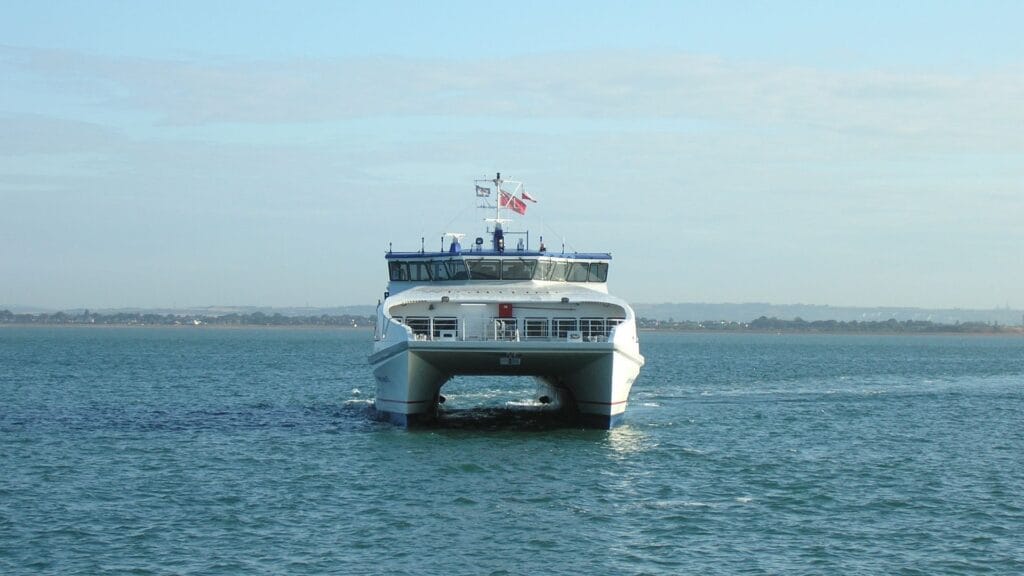
Depending on the length of your stay in Patra, you can choose the type accommodation. If you are only staying one night, waiting for a ferry to Italy or the Ionian Islands, then look for hotels in the city center as they are within walking distance or a short taxi ride from the port. If you are staying more nights, then you would be better off in the hotel Rio or Vrahneiki to have access to the beach.
Don't wander randomly! Read my article „Ferry ports of Greece“ and find out which ports are best connected, what they offer and how to choose the one that best suits your plans.
🎟️ Check out the ferry offers on the platforms Direct Ferries i Omio and find the most affordable and practical option for your next island trip!
Sights of Patras
Patra's beautiful beach promenade, interesting historical sites, joyful carnival in February/March and lively nightlife attract many visitors to this city. The most important location in Patra is the medieval castle, which is located above the Old Town and offers a panoramic view. The Church of St. Andrew is also worth a visit because it is the patron saint of Patra and the saint is believed to be a miracle worker. Below you can see the best locations in Patra.
Medieval Castle of Patra

The medieval castle of Patras was built on the highest point of the city, right above the Roman Odeon. It was built in the 6th century AD, on the site of the ancient acropolis, and this castle was occupied by the Franks, Byzantines, Turks and others. It was continuously in use until World War II and protected the city during war and sieges.
Patras Castle was originally built by the Byzantine Emperor Justinian in 551 AD using materials from pre-Christian buildings. In 805 AD, the castle protected the inhabitants from a pirate siege and this was considered a miracle of Saint Andrew, the patron saint of the city. Crusaders strengthened and expanded the castle in the Middle Ages, while later Constantine Palaiologus, the last Byzantine emperor, also made some alterations.
The castle remained in the hands of the Turks for almost five centuries, until 1828, when the French general Nicolas Joseph Maison liberated the city and handed it over to the Greeks. Today, the castle is open to visitors and has a small theater where cultural events are held in the summer. Its location offers an incredible view of the city, the harbor and the opposite coast of the Sterea.
Roman Odeon
The Roman odeon is located on the west side of Patras. It was erected before the famous Odeon of Herod of Attica in Athens, and in front of it stands a statue of Apollo. The Odeon of Patras was badly destroyed by successive invasions, wars and earthquakes. It was almost buried under the remains of other buildings and soil. It was in 1889 when the Odeon was accidentally found while some workers were digging the ground for the construction of the port.
The restoration of the Odeon continued until 1956, when it returned to its original form. Along with the process of its restoration, nearby areas were declared archaeological sites. Today, the Roman Odeon functions as the main venue for the Patras International Festival held every summer and other cultural events. The Odeon has a seating capacity of 2,300 with all the basic facilities of a theater such as a pit, orchestra, proscenium, stage and wings.
Church of Saint Andrew

The Church of Saint Andrew (Agios Andreas) is Patra's patron saint. According to tradition, the apostle Andrew, the first disciple of Jesus Christ, was crucified in this city, on a site near the pier. In fact, the great church was built on the very spot where the Apostle Andrew was crucified.
The Church of St. Andrew in Patra has the largest dome in the Balkans. Construction began in 1908, and the temple was consecrated in 1974, and has Byzantine architecture, with many arches and bell towers. Opposite this church is an older church, also dedicated to Saint Andrew, which was built in 1835 and designed by the famous architect Lysandros Kaftatzoglou. There is a spring of water right next to it and it is said that the Apostle Andrew breathed his last here in 66 AD.
Achaia Clauss Winery
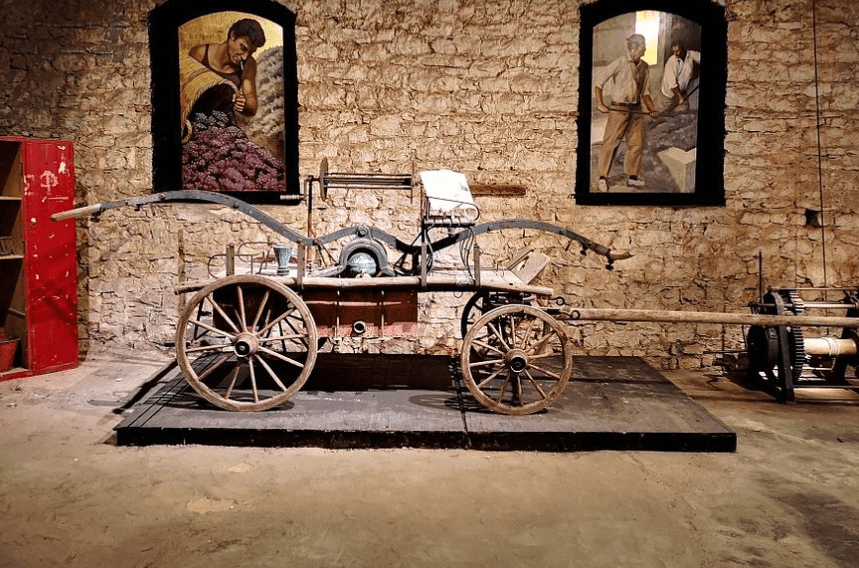
The Achaia Clauss Winery is one of the biggest tourist attractions in the Achaian region, located on a green hill about eight kilometers from the city of Patra. Achaia Clauss Winery it was founded in the 19th century by Gustav Claus from Bavaria, Germany, who was obsessed with the natural beauty of the region when he came to Patras to work for a German trading company.

Gustav became fascinated by the vineyards around Patra and the great wines they produced. Soon he bought a small vineyard and started producing wines, initially for his own consumption.
The success of his wine motivated Herr Claus to establish a large winery. The company Achaia Clauss was founded in 1861 and began the commercial production of various types of wine, including the famous Mavrodaphna from Patras, which soon achieved great success on the Greek and international markets, especially in Europe. According to legend, Achaia Clauss was so popular with the Nazis that they spared the winery when they invaded Greece during World War II.
In 1908, after the death of Gustav Klaus, the Greek government sold the company at auction to Vlasis Antonopoulos. However, Antonopoulos also faced financial problems and sold the winery to its current owner, Nikos Karapanos. Although many decades have passed and the owner has changed, the Achaia Clauss winery maintains the traditional method of wine production.
Achaia Clauss Winery is currently a very popular tourist destination, attracting around 200,000 visitors a year. Visitors are enchanted by the breathtaking view of the landscape in the middle of which the winery is located. Also of great interest are the stone buildings from the 19th century and the huge wine barrels wine carved from oak, especially the one containing the centuries-old Mavrodafne wine.
Municipal Theater Apollo
Apollo Theater in Patra is an architectural masterpiece. It was built by the German architect Ernst Ziller, according to a project from 1871, and the theater was opened on October 10, 1872 and is located on the east side of King George I Square, one of the most popular squares in Patra.
Its architecture is in the neoclassical style and it is one of three neoclassical theaters still surviving in Greece, the other two being the Malliaropouleio Theater in Tripoli and the Apollo Theater in Syros. In fact, the theater in Patra is a replica of Milan's famous Scala.
The municipal theater Apollo, with a capacity of 200 to 300 people, has occupied a special place in the cultural and artistic life of Patra since its construction. The theater is used during the carnival.
Are you planning a trip, a tour or an unforgettable travel experience? Then my text will surely mean something to you „"Activity Booking Apps"“ - here I have selected the best options that allow you to easily find and book everything, from sightseeing to adventure tours. 👉 [Read the article here]
Museum of Folk Art
The Museum of Folk Art in Patra founded the Patras Cultural Center in 1977, with the main goal of preserving the cultural heritage of the city. The museum exhibits a wide variety of artifacts and other folklore items.
The exhibits consist of many farming tools in the rural areas of Patra, as well as furniture and objects for daily use, information on different modes of transport, agricultural products and many handmade items unique to the villages around Patra. Many of the folk concepts and traditions are explained in detail with photos and texts.
The museum also has a large library and photo archive. He organizes debates and lectures on the history of Patra in terms of archeology and architecture. There are many traditional workshops available for hat making, shoemaking or wax making, which attract many students and adults to the museum every day.
👉 Don't let the lack surprise you internet while exploring the world! Read the whole text and find out which ones are the best internet access applications for carefree and safe travels.
Carnival in Patras
If there is one reason to come to Patra on purpose, and not by the way in front of the ferry, it is the carnival. Patrino carnival is the largest carnival in Greece and one of the largest in Europe, with more than 190 years of continuous tradition - it was first held in 1829.
Carnival always begins. January 17, St. Anthony's Day, regardless of when Easter falls. On that day, a messenger passed through the city on a decorated platform and with a satirical message invited the city to King George I Square, where the mayor officially opened the season from the balcony of the Apollo Theater. It ends at Clean Monday, the first day of Easter Lent.
What happens during the carnival
- Treasure hunt - a dance through the whole city that lasts for weeks and is what Patras is known for.
- Children's carnival – a week before the big parade, with about 5,000 children from all over western Greece.
- Night parade on Saturday – groups in costumes pass through illuminated streets.
- Big parade on Sunday – the pinnacle of everything. Huge satirical allegorical carts, about 30,000 participants and a parade that lasts for hours.
- Burning of the Carnival King - on the pier in St. Nikola Street, with fireworks, as the end of the season.
When is Carnival 2027? It starts, as always, on January 17. Clean Monday falls on March 15, 2027, so the big parade falls on Sunday March 14, 2027. The exact program is published on the carnival website only a few weeks before.
Practically: accommodation for the last weekend of the carnival, it is sold out months in advance and the prices then jump. If you can't find a room in Patra, look for one in Rio or in Nafpaktos over the bridge, so come by car. Dress warmly - March in Patra can be cold and rainy, and the parade can be watched outside for hours.
Rio–Antirio Bridge
Right next to Rio beach, seven kilometers from the center of Patra, stands what is probably the most photographed sight in the area: the bridge Rio–Antirio, officially named after Charilaos Trikoupis. It is about 2,880 meters long and is among the longest suspension bridges of its kind in the world, and it was built in an area that is both seismically active and very deep, making it an engineering feat.
The bridge takes you from the Peloponnese to the mainland in a few minutes Stereo region, and reaches Nafpaktos. The toll is paid, and the alternative is the ferry between Rio and Antirion, which is a bit cheaper but slower. The best view of the bridge is in the evening, when it is lit up, from the beach or from one of the bars in Rio.
Beaches in Patra
There are various beaches in Patra that you can visit during your stay. The nearest beaches line the coast of the Gulf of Patras, east and west of the city, and each of them has its own unique characteristics. Below you will find a list of the best beaches in Patras, Greece.

Rio Beach
The beach is clean and there are many beach bars that stay open all night and play loud music

Psatopirgos Beach
Everything is calm and family-friendly on the beach, as there are no beach bars or other water sports.

Rodini Beach
Rodini is a popular tourist resort in the prefecture of Achaia. It is located 17 km east of the city of Patra

Lambiri Beach
The coast is pebbly and the water is sometimes cold, as is usually the case with the water in this bay.
When to go and how many days to stay
Let's be honest: most travelers use Patra as a stopover, not a destination. And that's perfectly fine - the city is first and foremost a port. But how long you stay depends on why you come.
- One night – enough if you are waiting for the ferry. You arrive to see St. Andrew's Church, walk along the coast and have dinner in the center.
- Two days – enough for all the sights in this text, including the castle, the Odeon and the Achaia Clauss winery.
- Three to four days - if you want beaches and excursions to Olympia, Delphi or Missolongia.
Best time: May, June and September. In summer, the city is hot and humid, and Patras does not have the shade that the islands have. Winter is mild but rainy, with the exception of the carnival season, when the city is the most interesting in the whole year.
What to try: mandatory Mavrodaphne, a sweet red wine for which the region is famous, and local tsipuro. In the taverns along the coast, the fish is fresher and cheaper than in the center.