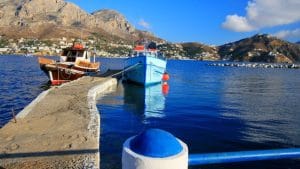
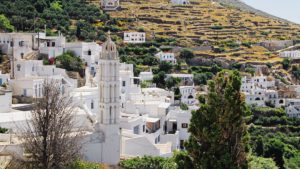
Island Andros is the northernmost island in the Cyclades group and one of the most beautiful for its own sake lush vegetation, mountainous regions and hidden beaches. Unlike many other Cycladic islands, which are dry and rocky, Andros abounds with springs, streams, olive groves and forests, so it is often called „"the green island of the Cyclades"“. Uprkos blizini Athens, ostrvo je zadržalo svoj autentičan šarm i mirnu atmosferu, izbegavši masovni turizam.
The charm of Andros
Capital city, Chorus, exudes an aristocratic spirit. Its streets are decorated with neoclassical buildings, Byzantine churches and Venetian towers. They stand out in particular noble mansions of sailors and captains, which testify to the island's maritime tradition. Beaches are another trump card of Andros - from popular and organized ones like Agios Petros, Batia and Golden Sands, to untouched and peaceful bays such as Vlihadu, Agios Sostis and Halkolimnionas. The sea is crystal clear, and the contrast between the green nature and the blue sea makes the landscapes unforgettable.

Za ljubitelje prirode, ostrvo nudi network marked hiking trails which lead through chestnut, walnut and oak forests, to traditional villages and old monasteries. Andros is also famous for its springs - especially Menites with its fountains. If you love history and culture, visit Paleopolis (ancient capital), prehistoric settlement of Plaka, as well as Zagora settlement. Art lovers will be delighted Museum of Modern Art, while there are also archaeological museums and Cyclades Olive Museum.

How to get to Andros?
Accommodation, beaches and sights
Andros Island – History
Andros is an island with a rich and layered past, the traces of which stretch from prehistoric times to modern times. In ancient times it was known by different names: Gavros, Hydrosa, Epagris and Lasia, which reflected its connection with the abundance of water and greenery that still today sets it apart from the other Cycladic islands.
Andros Island - Ancient Period
Archaeological research has shown that the island was inhabited as early as the Mycenaean era (1600-1100 BC), and possibly even earlier. The earliest inhabitants were Carians, Pelasgians, Phoenicians and Cretans, while around 1000 BC. Ionians colonized the island. In geometric period (9–7th century BC) Andros became an important center, which is confirmed by finds from the settlement Zagora, with temples, sanctuaries and fortifications. In the 7th century BC the island took part in colonization Halkidiki and northern Greece together with the Chalcidians. By the 6th century BC, Andros functioned as independent polis and belonged to Amphictyon on Delos. God is most revered Dionysus, patron of wine and festivities.
During classical era, the capital was Paleopolis, and the remains of the agora, walls and coins were discovered, which speaks of the wealth and prosperity of the island. In the Persian Wars, Andros was dominated by Persia until the Battle of Salamis (480 BC), when it was taken over Athens. After that, the island went through phases of Athenian and Spartan domination, until the Battle of Chaeronea (338 BC), when it came under the rule of Philip II of Macedon, and later Alexander the Great. After the collapse of the Macedonian Empire, the island passed under the rule of various successor states, until it was included in the Roman Republic (129 BC).
Andros Island - Byzantine Era
In the early Byzantine period, Andros was part of the empire and belonged to the drungaria (military commander) of the Aegean Sea. This period was marked by the construction of numerous churches and monasteries, some of which are still preserved today.
Venetian and Frankish rule
After the fall of Constantinople in 1204, Andros came under the rule of Venice, that is, the family Sanudo, and then Crispo and other noble dynasties. This period brought feudalism and the construction of villas, castles and fortifications. The most famous example is Faneromeni Castle, while the island's economy was based on silk trade and silk processing.
👉 Don't let the lack surprise you internet while exploring the world! Read the whole text and find out which ones are the best internet access applications for carefree and safe travels.
Andros Island - Ottoman era
In 1579, Andros fell under Ottoman rule. The inhabitants of the island, compared to other parts of Greece, had certain privileges - they could freely practice Orthodoxy, guard churches and monasteries, as well as wear traditional costumes. However, taxes were still high. Despite this, trade and shipping continued to bring in revenue and allowed the island to maintain relative stability.
Revolution and modern history
Greek War of Independence (1821) it had a great impact on Andros as well. Theofilos Kairis, priest and revolutionary, raised the flag of the Revolution in the church of Saint George in Hora on May 10, 1821. After the independence of Greece, Andros entered a period of great maritime and economic prosperity. During the 19th and early 20th centuries, Andros was one of the most important maritime centers u Grčkoj. Njegova trgovačka flota bila je druga po veličini u zemlji, odmah posle Piraeus. Ovo bogatstvo ostavilo je trag u arhitekturi i kulturi ostrva – mnoge vile i palate u Hori i okolini svedoče o zlatnom dobu brodarstva.
Andros Island – 20th century and today
Tokom Drugog svetskog rata ostrvo je pretrpelo velika razaranja – italijanska i nemačka okupacija donela je gubitke u ljudstvu i uništenje mnogih vila u Hori. Nakon rata usledile su masovne migracije stanovništva, najpre u Athens, a zatim i u SAD i Kanadu. Danas, Andros je spoj bogate istorije, pomorske tradicije i prirodne lepote. Njegova prošlost vidljiva je u arheološkim nalazištima, manastirima i muzejima, dok je kulturno nasleđe i dalje živo kroz običaje, festivale i tradiciju ostrvljana.
Conclusion: The history of Andros is the story of an island that, thanks to its water, fertility and strategic location, was important throughout the entire history of the Mediterranean - from the ancient polis and Persian wars, through Byzantine and Venetian times, to the maritime boom in the new century.