

Homer was one of the greatest early Greek poets. Legend has it that he was blind and recited his poems while traveling from one place to another. That's why people say he called himself a singer, not a writer. After his death, others perpetuated his work by reciting it wherever they traveled and eventually scribes wrote it down.
Homer created excellent poetry that expresses deep human emotions. The Greeks placed him on a very high pedestal declaring him their greatest poet and almost worshiping him. His most famous works include the epics The Iliad and The Odyssey. The plot of both epics consists of a series of exploits and adventures. They give a message of heroism, wisdom and other desirable qualities that set an example for the laity to follow.
👉 Don't let the lack surprise you internet while exploring the world! Read the whole text and find out which ones are the best internet access applications for carefree and safe travels.
Homer the first writer
What must be commended is that Homer had no literary work to guide him, for literature itself was in its infancy when he composed his works. He is considered the world's first great writer and a model for others to imitate for centuries to come.
Herodotus places Homer's age at about 400 years before his time, which would be about 850 BC. That date has been accepted by many scientists as the most probable. Almost all legendary evidence indicates that he was Greek, born in present-day Asia Minor Turkey.
There are at least seven cities that claim to be his birthplace, incl Chios island , Rhodes Island , Smyrna, today's Izmir, Colophon in Turkey near Ephesus, Salamis, and even Athens and Argos on the Greek mainland, but most evidence points to Smyrna as a possible candidate.
Homer dies on Ios.
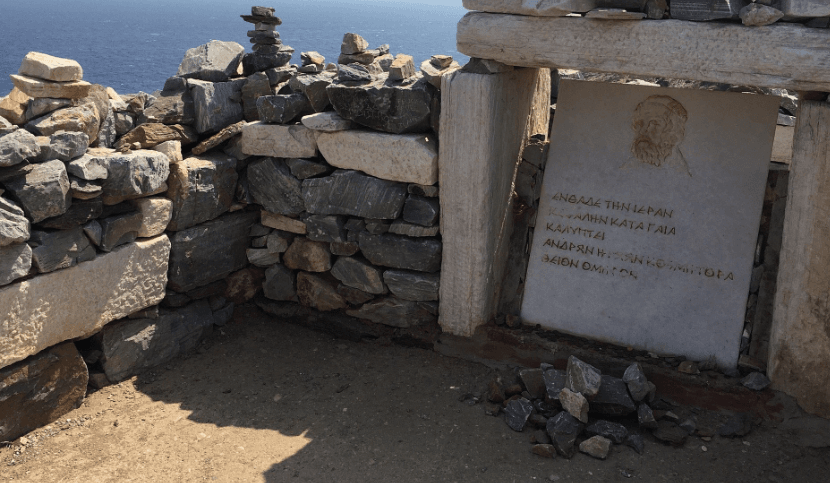
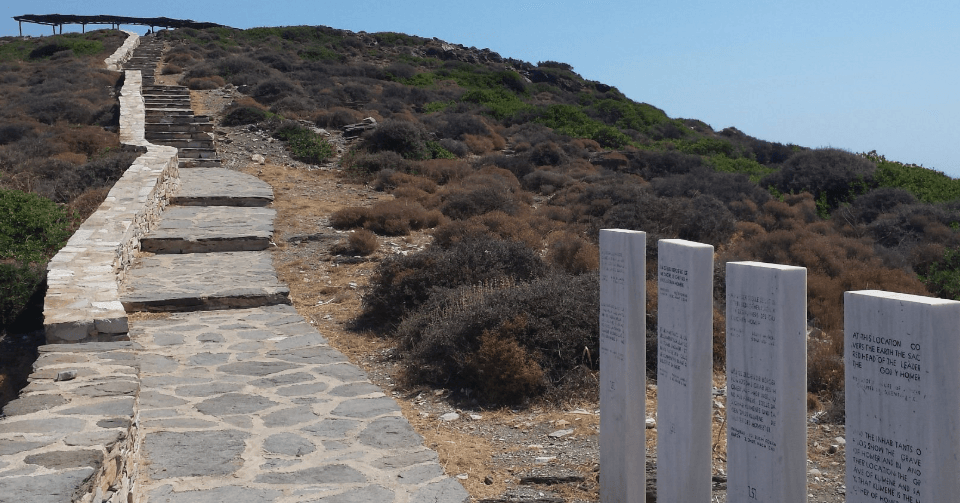
According to the testimony of reliable ancient writers, such as Herodotus and Pausanias, Ios was the island where he died and where Homer's tomb . Information about Homer's death and burial can be found in the writings of Strabo. The legend of how Homer died has different versions.
The most common version (according to Pausanias) is that Homer visited the oracle in Delphi to ask Pythias who his parents are and what his origins are. The Pythia replied with the following prophecy: "Your mother's home is the island of Ios, which will welcome you when you die, but beware of the riddles of little children." However, the poet ignored the prophecy and traveled to Ios to find his roots. When he got there, Homer saw small children fishing on the shore. He asked them what they caught, and the children answered: "What we catch, we leave, what we don't catch, we take with us."„
What the kids were talking about were lice. However, Homer could not find the answer to the riddle and at that moment he remembered the Pythia's warning. He was terrified when he remembered him and quickly left. Legend has it that the road was muddy and the poet slipped and fell in his haste. Then he hit his head and died almost instantly. According to another version, Homer died of grief because he failed to solve the riddle.
Ultimately, what we should focus on and be thankful for is the fact that his great epics have been handed down intact. Both the Iliad and the Odyssey are considered milestones in human literature. The content, ideas and style of his epics formed the foundations of Greek education in the age Socrates, Plato i Aristotle and have influenced works of Western literature, including the works of William Shakespeare, while also inspiring a multitude of readers throughout the centuries. The very beauty and power of imagery and universality of the theme are commendable.


