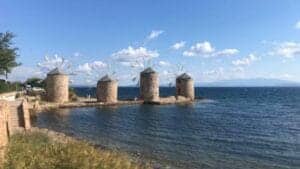
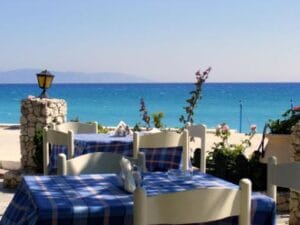
Located in the heart of the Saronic Gulf and belonging to the Saronic Islands group, the island of Spetses, Greece has a lot to offer in terms of beaches, sightseeing and relaxation. A ferry ride from Athens will take you to this beautiful Aegean island in just a few hours. That is the reason why it appeared as an excellent vacation destination!
The island stands out for its architecture and elegance, especially in the capital. This is mainly due to the Venetian villas located in the city and the excellent boutique hotels that combine traditional with modern elements in a unique way.
👉 Don't let the lack surprise you internet while exploring the world! Read the whole text and find out which ones are the best internet access applications for carefree and safe travels.
You won't find cars in the city, as they are prohibited, so you can roam freely and explore the picturesque alleyways at your own pace. Around Dapia, the island's port, there is a good selection of cafes and bars, ideal for a romantic sunset drink. In Dapia you will also find the Spetses Museum and Anargiros Villa among other attractions. Walking around the city, you will discover even more places to see!
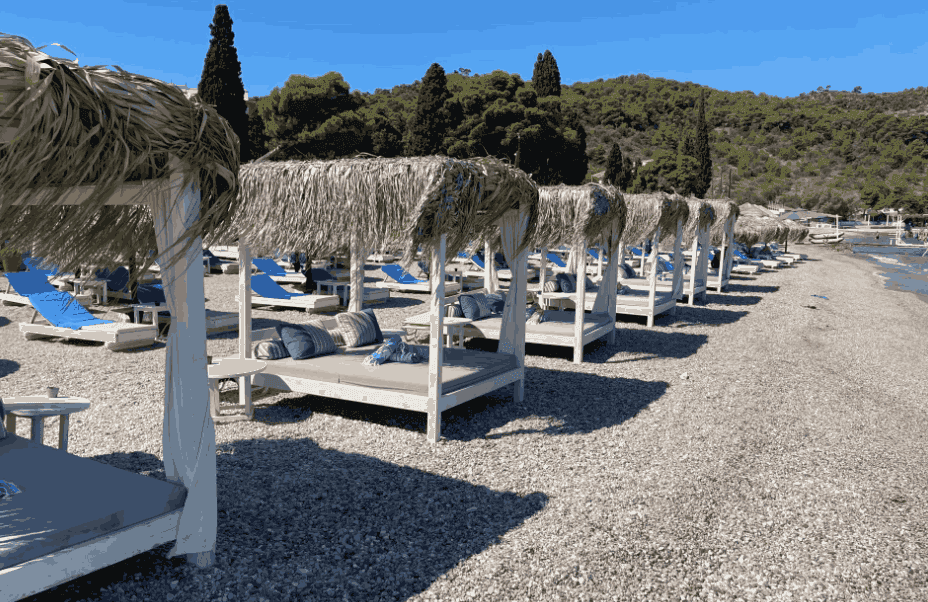
The beaches on the island alone are reason enough to visit Spetses! Vrellos, Agia Marina and Agia Paraskevi are the best. However, these beaches are located quite far from the city, so it is best to rent a car or travel by bus. If you like sports, keep in mind that many athletic events, such as marathons, are often organized, usually in the fall and spring.
How to get to and move around the island of Spetses?
Accommodation, beaches and sights
History - Spetses Island, Greece
Special is a small island in the Saronic Gulf, but with a rich and turbulent past that stretches from prehistory to modern times.
👉 Although it is crucial to have insurance, it is equally important to know how to find medical help when you need it. Check out my guide on that how to find a doctor while traveling for tips on how to be prepared for health emergencies while traveling.
Prehistory and Early Period - Spetses Island, Greece
Archaeological findings confirm that the island has been inhabited since the early Bronze Age (around 2500 BC), also known as the first Hellenic era. During the Mycenaean period (1750–1050 BC) the island bore the name Pythias, which means "covered with pines", after the dense forests that adorned it.
Later, during the Venetian rule (1200–1460), it got its name Isola di Spezie, that is "island of spices/fragrances", because of the aromatic vegetation and herbs that grew on its slopes.
The Middle Ages and the Age of Piracy
In the 15th century, a larger number of settlers from the Peloponnese came to the island, but constant pirate raids did not allow for stable settlements. It was only in the 17th century that the first serious settlement emerged - Castles, on the northwest side of Speces, fortified with thick walls for defense. From that moment, the development of the special maritime tradition began, which became the island's trademark.
The Golden Age and participation in the revolution
In the 18th century Speces entered a golden age, with the flourishing of shipbuilding and trade. A powerful merchant fleet was formed, which was later converted into warships. Speces also participated in Orlov's Rebellion in 1769, when the island fleet supported Russian plans to liberate Greece. Although the Ottoman punitive expedition destroyed Castelli, the Specioti did not give up - they helped revolutionaries, such as Lambros Kacionis in 1790, which again provoked Ottoman reprisals.
Finally, In 1821, Speces was one of the first islands to respond to the call for an uprising. As one of the three key maritime centers of Greece (along with Hydra and Psara), the island made a huge contribution to the Revolution. The Speces fleet participated in the liberation Nafplion, Monemvasia, Mani and Messolonghi, as well as in the siege of Tripoli. Spaceships also opposed the Egyptian fleet in Crete, and they played an important role in the decisive one Battle of the Argolic Gulf, where the Ottomans suffered a heavy defeat.
The memory of those events is preserved through the festival Meowth, which takes place every year on the second weekend of September in the main port, with reenactments of naval battles and fireworks.
„"Why wait for the perfect companion when you can go on the adventure of a lifetime tomorrow? Learn 10 key tips to make your solo trip safe, exciting and deeply fulfilling. Click to read ‘'Solo Travel: 10 Tips for an Unforgettable Solitude Adventure'!’
Heroine Laskarina Bouboulina
The most famous personality of Speces is certainly Laskarina Bubulina (1771–1825), the legendary heroine of the Greek Revolution. As a rich widow and ship owner, she became a member of a secret society Filiki Etheria, equipped her own fleet and personally participated in battles. She invested a huge part of her fortune in financing the fight for freedom. Her house on Speces is today a museum and one of the most visited places on the island.
In addition to her, many distinguished Speces families - such as Hatzigiannis-Mexis, Barbatics, Home, To Pan i Lambru - they gave ships, money and lives for the revolution.

Spetses Island, Greece - From the 19th century to the present day
Speces maintained its prosperity even after the Revolution, but at the beginning of the 20th century it began to lose its importance because it Piraeus became the main commercial and maritime center of Greece. During the two world wars, the island experienced decline and poverty, and many residents emigrated abroad.
The resurgence comes thanks to tourism in the first half of the 20th century. The island is becoming a fashionable resort, especially thanks to vision and investment Sotiris Anargyros, a rich returnee from America. He financed roads, a water tank, pine afforestation and nature protection, but also the construction of a luxury hotel Poseidonion Grand Hotel (1914) and prestigious schools Anargyrios and Korgialeneios.
Today Speces enjoys a reputation as an elegant and cosmopolitan island, which retains the spirit of its glorious maritime past, but also attracts visitors with its festivals, museums and preserved traditions.