Mersin, Turkey is a large commercial city and an important port on the eastern coast of the Mediterranean Sea in Turkey. Although not among the most famous tourist destinations, Mersin is increasingly attracting travelers who want to experience a more authentic, less commercial side of Turkey.
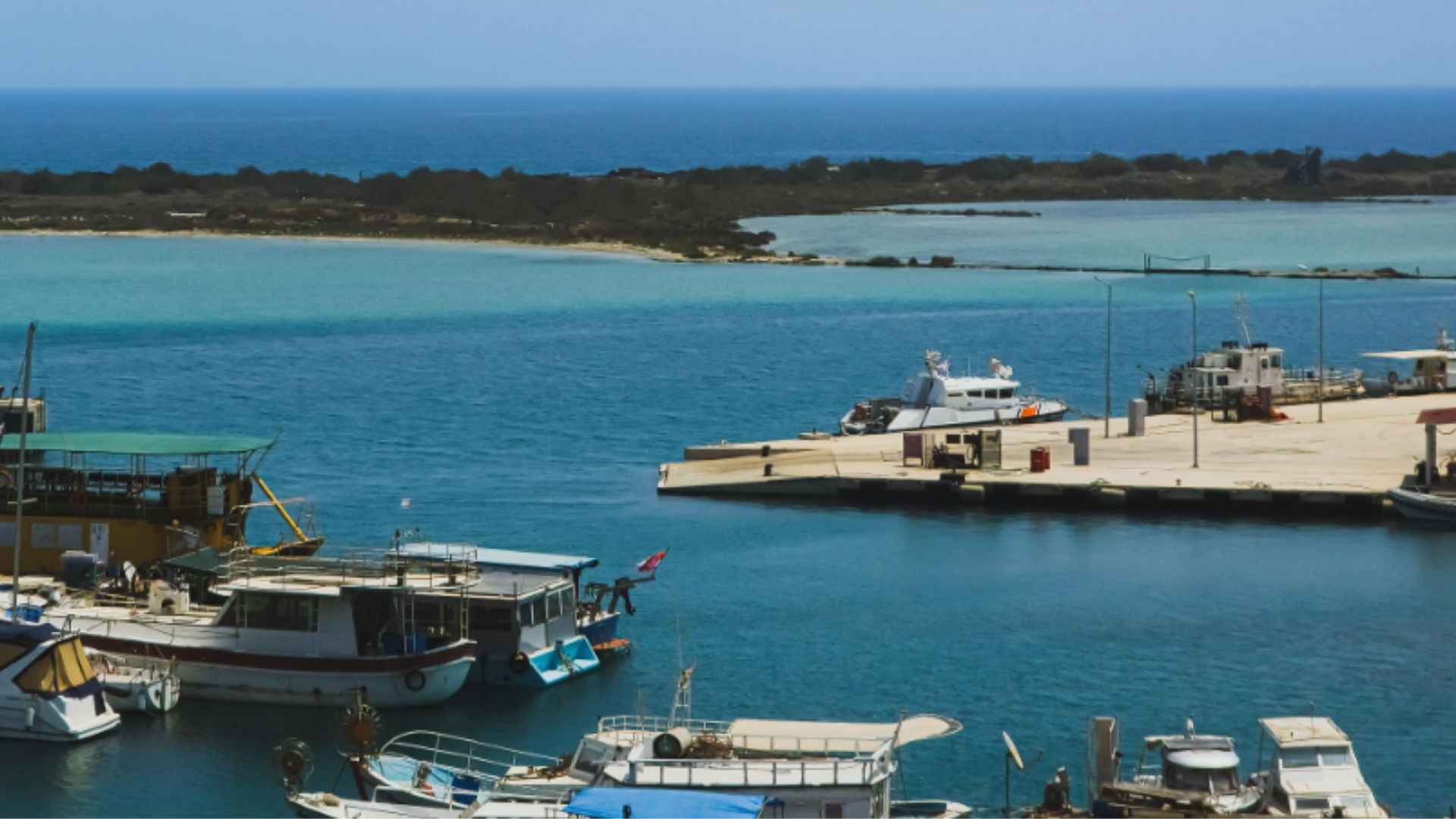
With about 1.5 million inhabitants, Mersin is the administrative center of Ichel Province and an important link with Northern Cyprus, thanks to the ferry lines connecting the coast with the city of Famagusta.
If you are looking for a destination without crowds, with long beaches, history and local charm – Mersin could pleasantly surprise you.
How to get to Mersin
The nearest airport is Adana Airport (about 50 km). From the airport you can travel by bus, ferry.
By bus:
Mersin is a large transport center with good connections to; Adana, Osmaniye and other cities of Turkey.
By ferry:
Regular services connect Mersin with so if you want to connect Turkey and Cyprus you have regular services to Famagusta.
You can move around Mersin:
- public transport (buses and minibuses - dolmuş)
- taxi
- car rental (best option for excursions)
The town is long and spread out along the coast, so a car is practical if you want to explore the beaches and the surrounding area.
Beaches in Mersin
Mersin has kilometers of coastline with different types of beaches. The most famous beaches: Kizkalesi Beach - sandy, ideal for families, Susanoglu Beach – clean water and organized facilities.
Advantages:
- less crowded than in Antalya or Alanya
- more favorable prices
- long, often sandy beaches
Kizkalesi Beach (Kizkalesi Beach)
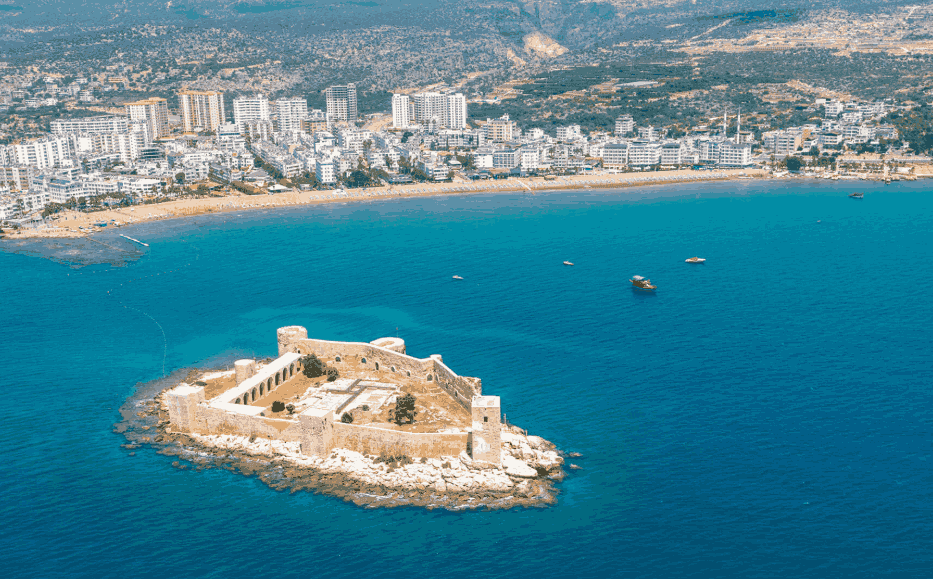
Kizkalesi Beach, located in the Erdemli district of Mersin, is named after the historical Kizkalesi in the center of the Mediterranean Sea. This special place, which stands out for its natural beauty and cultural heritage, is on the UNESCO World Heritage List and is one of the 100 must-see buildings in Turkey.
The beach, which is 23 km from the center of Erdemli and 60 km from the center of the city of Mersin, is visited by both domestic and foreign tourists because of its fine sandy beach, clear sea and impressive view.
Kizkalesi beach, which has a blue flag certificate, stands out for its environmental awareness and water quality. It offers visitors a comfortable sea experience with ramps for the disabled, regularly cleaned showers and toilets, changing cabins, sunbed service and a buffet offering a variety of products.
Kizkalesi, which is very convenient in terms of transportation, can be easily reached by buses departing from Mersin at frequent intervals during the summer season or by private vehicles. The nearest airport is Cukurova International Airport.

Susanoglu Beach (Susanoğlu Beach) – Mersin, Turkey
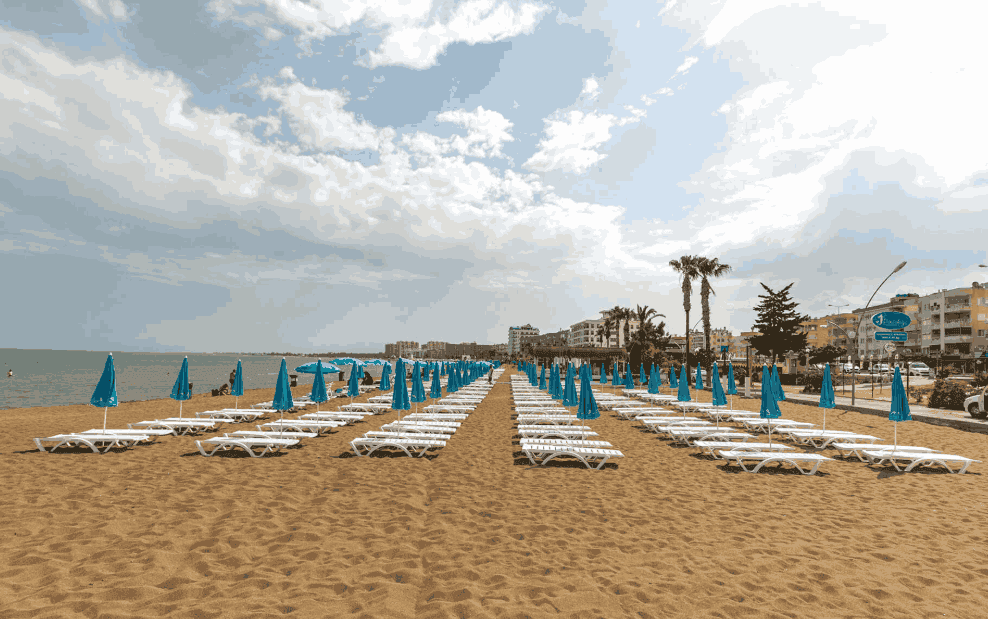
Susanoglu Beach, located in the city of Mersin in Atakent, is one of the most popular beaches of the Mediterranean with its clean coast and crystal clear sea. This private beach, located 90 km from the city center, is one of the must-see routes for both domestic and foreign visitors.
With 2 blue flags, Susanoglu Beach stands out for its environmental awareness and safe swimming areas. With its long beach, regular cleaning and friendly staff, everything you need for a pleasant day has been designed. The beach offers sunbeds, ramps suitable for disabled people, clean showers and toilets, changing rooms and a buffet table serving a variety of delicacies. This large space, where guests of all ages can comfortably spend time, welcomes thousands of people during the summer months.
Accommodation in Mersin
Mersin offers various accommodation, but without mass resorts like in western Turkey. Prices are generally lower than in tourist centers like Antalya.
Sights and attractions in Mersin
Although it is not a classic tourist town, Mersin and its surroundings offer interesting locations:
Great Mosque (Ulu Camii) – Mersin, Turkey
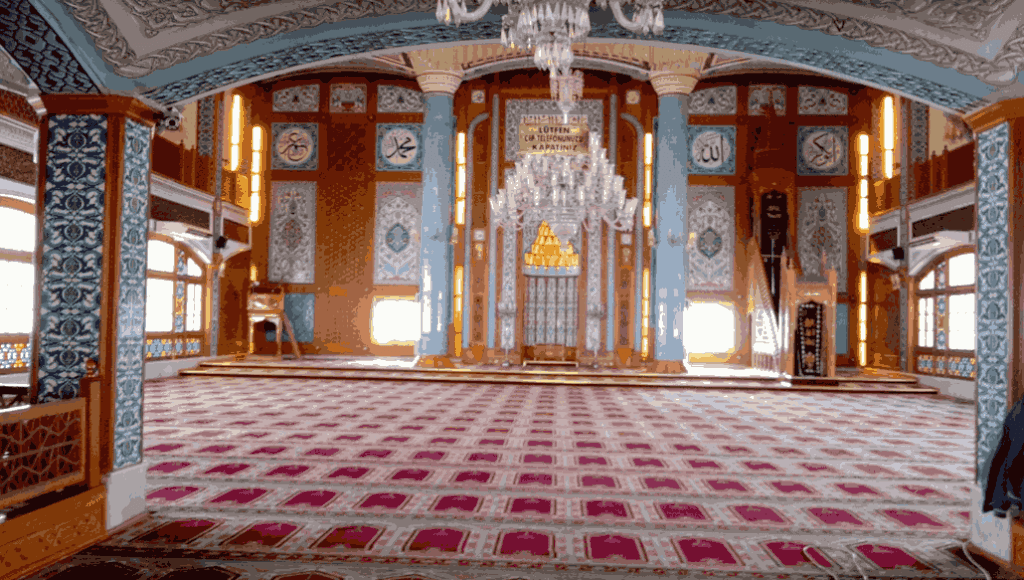
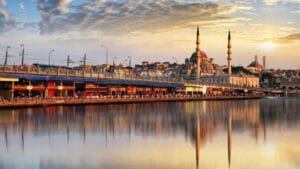
The Ulu Camii (Great Mosque) of Mersin is a monumental Ottoman-Islamic place of worship located in the center of the city of Mersin, in southern Turkey. It is known for its impressive size, two minarets and lavish interior decoration, making it one of the most recognizable religious and architectural symbols of the city.
The Great Mosque in Mersin is characterized by a spacious prayer hall under a large central dome and a combination of traditional Ottoman and contemporary architectural elements. The interior is decorated with calligraphic inscriptions and tiles in blue and gold tones, while the exterior is decorated with a white marble facade and tall minarets visible from different parts of the city.
The mosque is the main center of Islamic life in Mersin and one of the most visited places for communal prayers, especially during Fridays and religious holidays. In addition to its religious significance, the Great Mosque is also a cultural benchmark that symbolizes the modern development of the city while preserving the Islamic tradition.
It is located in the central city area, near the coast of the Mediterranean Sea and the main city boulevards. It is surrounded by shops, restaurants and public areas, which makes it easily accessible to tourists and believers. Due to its location and size, it is often used as a landmark when visiting Mersin.
Atatürk's House (Atatürk Evi) Mersin, Turkey
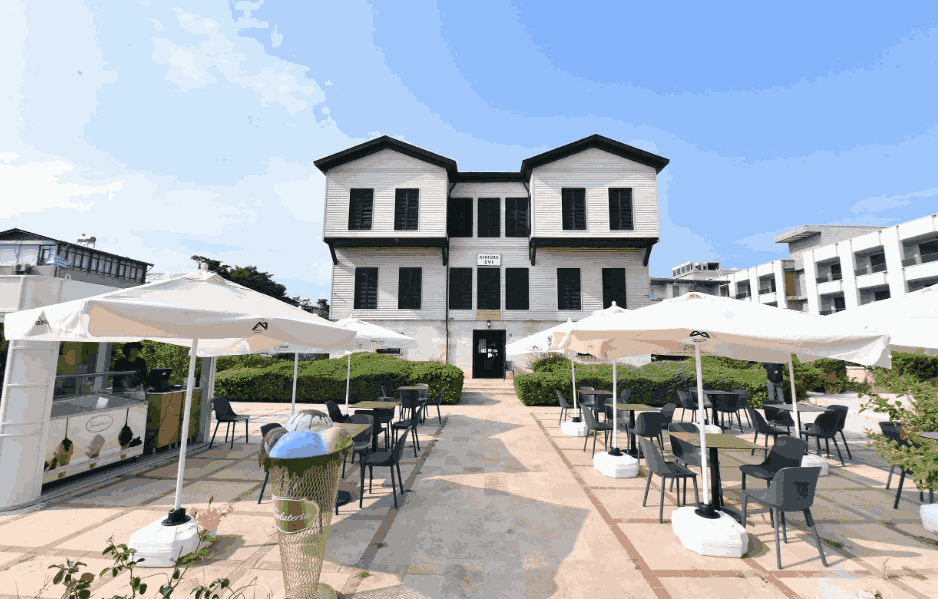
Atatürk Evi Mersin is a museum-house in the city of Mersin, Turkey, dedicated to the residence and memory of the founder of modern Turkey, Mustafa Kemal Ataturk. The building, an example of architecture from the end of the 19th century, preserves authentic furniture, personal items and documents related to his visits to the city.
Built at the beginning of the 20th century by a rich merchant from Mersin, the house attracted attention with its stone facade and spacious yard. During Ataturk's stay in Mersin in 1923, the building served as his residence, which later became the basis for a memorial museum.
The house was restored and opened to the public as a museum in 1992 on the occasion of the centenary of Ataturk's birth. The museum display recreated the interior from the period of his visit, including original furniture, personal items and photographs documenting his stay.
The museum has two floors: on the ground floor there are administrative and auxiliary spaces, while on the first floor there is an exhibition area with rooms displaying Atatürk's objects, replicas of documents and photographs from the 1920s. Atatürk Evi Mersin plays an important role in preserving the collective memory of the early republican period and Atatürk's modernizing vision of Turkey.
Archaeological site of Soli-Pompeiopolis - Mersin, Turkey
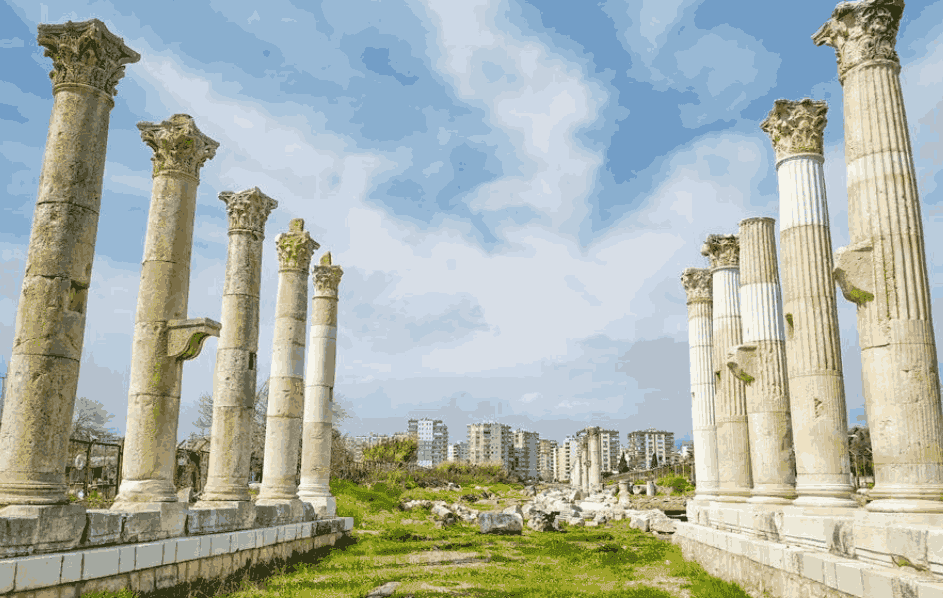
Soli-Pompeiopolis is an ancient city located west of the present-day city of Mersin, in the south of Turkey. Originally founded as Soloi in the Hellenistic period, it was an important port and trading center in Cilicia. Romans rebuilt it after an earthquake in the 1st century BC and renamed it Pompeiopolis.
Soloi originated as a Greek colony in Cilicia, strategically located along the Mediterranean Sea. Thanks to the port and trade, the city flourished during the classical era. After a devastating earthquake, Gnaeus Pompey the Great rebuilt the city, settling there Roman veterans and renamed it Pompeiopolis.
The main remains include a monumental street with more than 200 columns, a Roman road, a theater and the foundations of public buildings. The colonnaded boulevard is about 200 meters long and represents one of the best-preserved examples of urban planning in Roman Cilicia. Excavations reveal traces of the continuity of life from the classical to the Byzantine era.
Soli-Pompeiopolis bears witness to the meeting of Greek and Roman culture on the coast of Cilicia. It was an important center of trade, art and philosophy; in ancient times known as the birthplace of the philosopher Chrysippus. Today, the site is a protected archaeological park and one of the most visited ancient sites in the Mersin region.
Maiden's Fortress (Kız Kalesi) – Mersin, Turkey
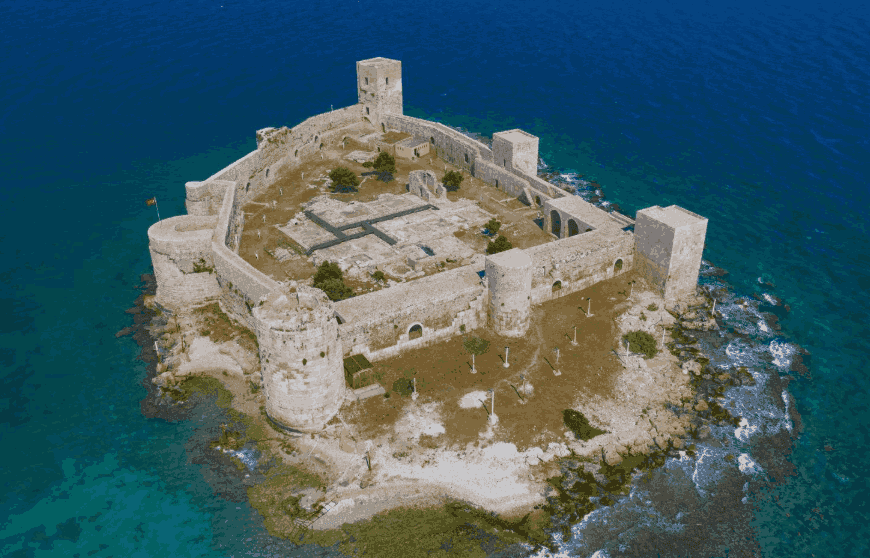
Kız Kalesi (Maiden's Fortress) is a seaside fortress located on a small island near the city of Erdemli in Mersin Province, Turkey. Also known as "Virgin's Castle", this medieval fortress is one of the most recognizable symbols of the Mediterranean coast of southern Anatolia.
The fortress dates back to Byzantine period, and was later expanded by the Crusaders and the Armenians of Cilicia. Its position on a small island made it easy to defend against attacks from the mainland. During Ottoman era served as a guard post to control coastal traffic. Archaeological research has revealed walls, towers and water tanks that testify to a multi-layered history.
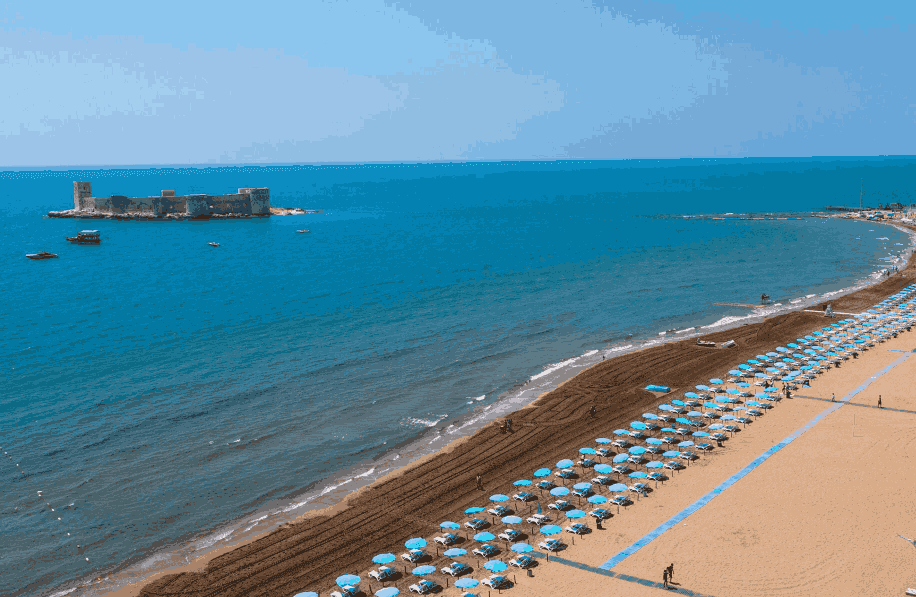
The walls follow an irregular rectangular plan with more than ten towers. The main gate faces the mainland, while inside there are the remains of living quarters and cisterns. The mixture of Byzantine and Armenian construction techniques is visible in the way the stone is worked and the placement of the arches.
Kız Kalesi is a popular tourist destination and part of Mersin's cultural heritage. The place is surrounded by beaches and a fishing village of the same name. The castle has inspired numerous legends, including the story of a princess who was hidden on an island by her father to protect her from a prophecy.
The fortress is under the protection of the Ministry of Culture and Tourism of Turkey and is accessible to visitors throughout the year. Thanks to its location near the tourist resort of Kizkalesi, it combines historical importance with recreational and tourist content.
Caves of Heaven and Hell (Cennet ve Cehennem)
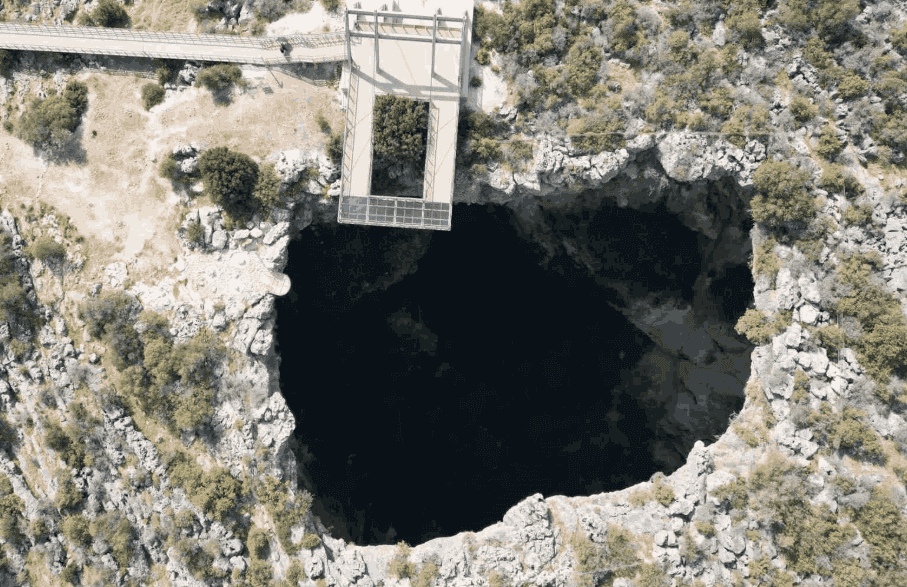
Cennet ve Cehennem ("Heaven and Hell") are two natural sinkholes near the town of Narlıkuyu in the Turkish province of Mersin. They were created by the collapse of underground cave vaults and are part of a wider karst landscape known for its spectacular landforms. The place is a popular tourist attraction that combines natural beauty and mythological symbolism.
The sinkholes were formed due to the chemical dissolution of limestone rocks and the subsequent collapse of the vaults of underground caves. Cennet ("Heaven") has gentler slopes and more accessible ground, while Cehennem ("Hell") is steep and inaccessible, which explains their names in local tradition. These formations are part of an active karst system in the Tauro Mountains area.
According to Greek mythology, the god Zeus imprisoned the monster Typhon in this area, which contributed to the religious significance of the site in antiquity. Inside the Cennet sinkhole there is a small church dedicated to the Virgin Mary from the 5th century, which bears witness to the early Christian cult and the importance of the place as a sanctuary.
Today, Cennet ve Cehennem is decorated for visitors with steps leading to the bottom of the Cennet sinkhole and a modern lookout point above the Cehennem sinkhole. The nearby village of Narlıkuyu offers restaurants and small museums dedicated to the archaeological heritage of the region. This place is a combination of geological rarity, archeology and mythology characteristic of the Mediterranean part of Turkey.
Famagusta under administration Turkish Republic of Northern Cyprus
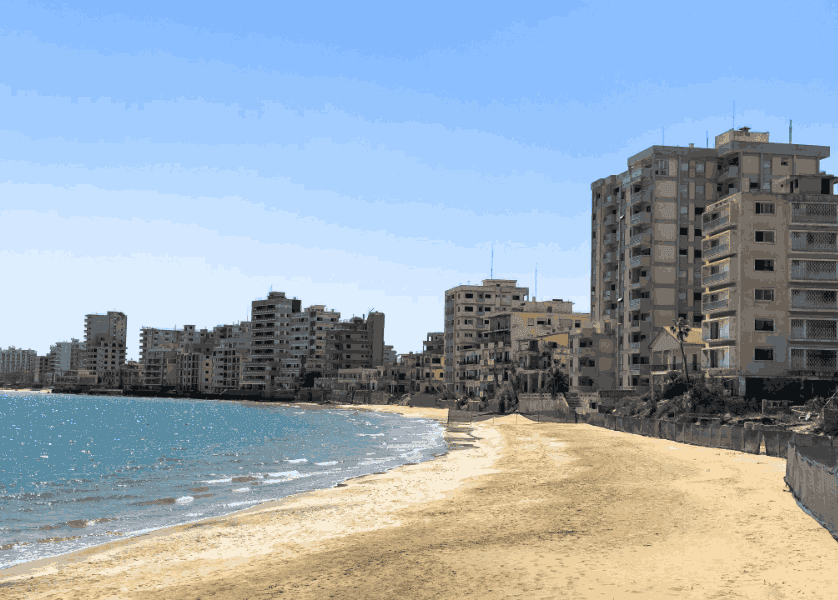
Famagusta (tur. Gazimağusa) is a coastal city on the eastern side of Cyprus, known for its historic walled core and the abandoned city quarter of Varosha. Today it is located in the part of the island under the self-proclaimed administration Turkish Republic of Northern Cyprus, while the Republic of Cyprus considers it part of its territory.
The city originated as a port settlement of Arsinoe and flourished during the course reign of the Lusignans (13th–15th centuries). At that time, it was one of the richest trading centers of the Levant, with numerous Gothic churches and walls that made it impregnable. After Venetian and Ottoman rule, Famagusta retained its status as the island's key port.
During the Turkish invasion of Cyprus in 1974, Famagusta was the scene of fighting and has been divided ever since. Its modern coastal district Town, once luxury resort, was evacuated and closed under military control for decades. The partial opening of Varosha to visitors began in 2020, sparking international debate about the property's status and sovereignty.
Today, Famagusta is the administrative and university center of Northern Cyprus, with growing tourism and port activities. The city combines layers of medieval architecture with modern development and remains a symbol of the island's division, but also a meeting place of different Mediterranean cultures.
Conclusion
Mersin may not be the first destination that comes to mind when planning a trip to Turkey, but that's where its charm lies. This city offers a blend of history, nature and local life, without overcrowded beaches and tourist chaos.
If you want to discover a different Turkey - Mersin is a great choice.
This place is one of the stages on the circular road along the coast of Turkey — from the Black Sea to the Greek border, on main roads.